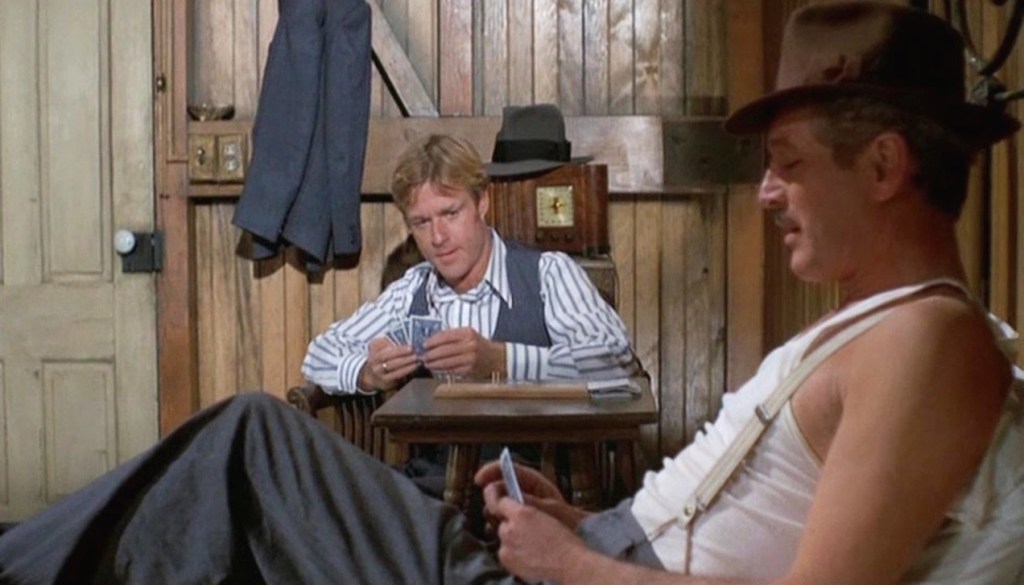
The Sting (1973), directed by George Roy Hill. Streaming at home, Tuesday, April 18.
We didn’t see a lot of movies in the early 70s. For starters, I was born in 1968, my brother in ’69. Then there was the fact that we lived in the middle of nowhere, in a town called Freeland, near Saginaw, Michigan. Freeland is a town that seems to be built only on rural roads where people drive fast. We lived in an old, melancholy rented home that faced a farm, and was flanked on either side with death–go past the ditch and you’d get killed by a car, stumble down the overgrown banks and you’d fall into the Tittabawassee River, which flowed through Midland, where Dow Chemical was, and it was so polluted you’d drown or dissolve if you fell in. We had gypsy moths squirming in the trees and a wildcat under the home. And we had chaos inside, a series of events that upended us, involving depression and being sent away to live with our grandparents.
The Sword of Doom (1973), directed by Kihachi Okamoto. Criterion Channel at home, Saturday, April 15.
The Criterion Collection page for The Sword of Doom states that this film is about “[a] gifted swordsman plying his craft during the turbulent final days of shogunate rule in Japan, Ryunosuke kills without remorse or mercy. It is a way of life that ultimately leads to madness. Kihachi Okamoto’s swordplay classic is the thrilling tale of a man who chooses to devote his life to evil.”
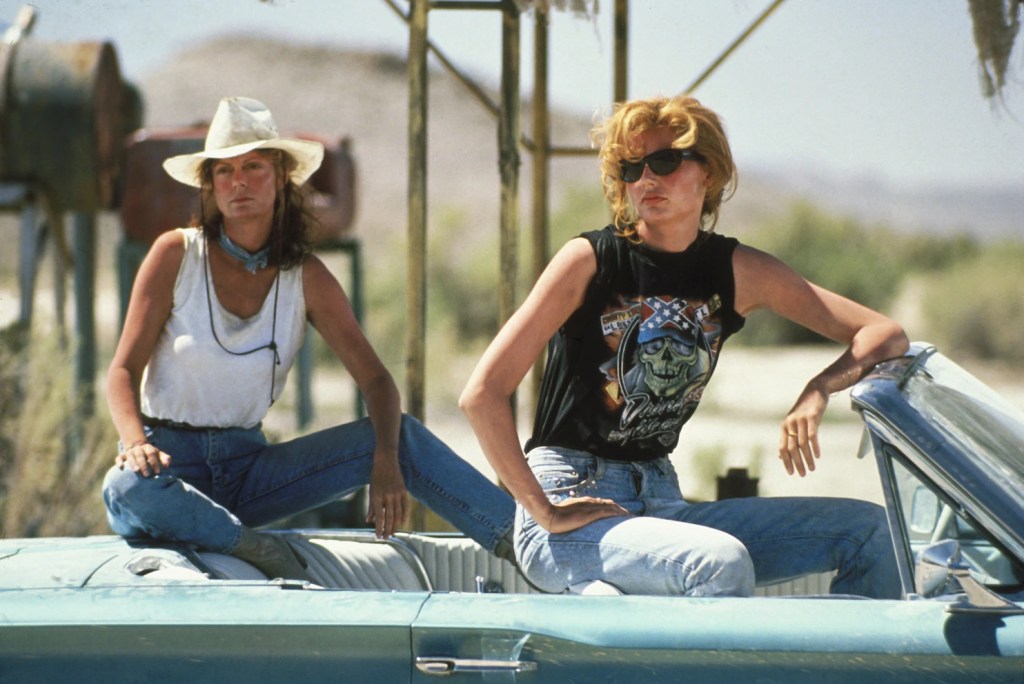
Thelma & Louise (1991), directed by Ridley Scott. Streaming at home, Wednesday, April 12.
I hadn’t seen Thelma & Louise since it came out in the early 90s, halfway through the one and only term of President George H. W. Bush. Watching it again the other night, I was really entertained–in fact, I want to watch it again. It made me realize that a Susan Sarandon series would be pretty interesting (I mean, Rocky Horror, Atlantic City, Bull Durham and this one makes four good films). It’s also a fascinating movie in terms of its backstory and what you see on the screen.
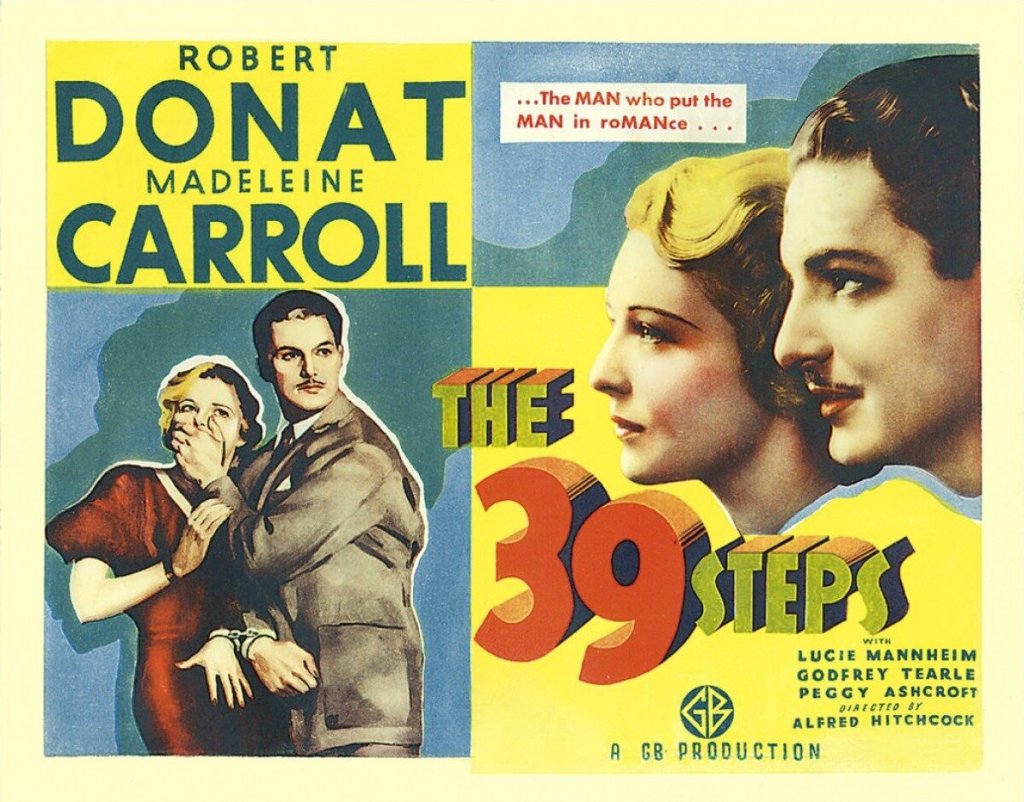
The 39 Steps (1935), directed by Alfred Hitchcock. Heights Theater, Thursday, April 6.
I love watching Hitchcock films at the Heights Theater, sold-out screenings with everyone so excited and flipped out to be watching them on the big screen in such a gorgeous place. And there’s always someone who gasps, someone who hasn’t seen Vertigo or Rear Window or North by Northwest and is stunned at a plot twist.
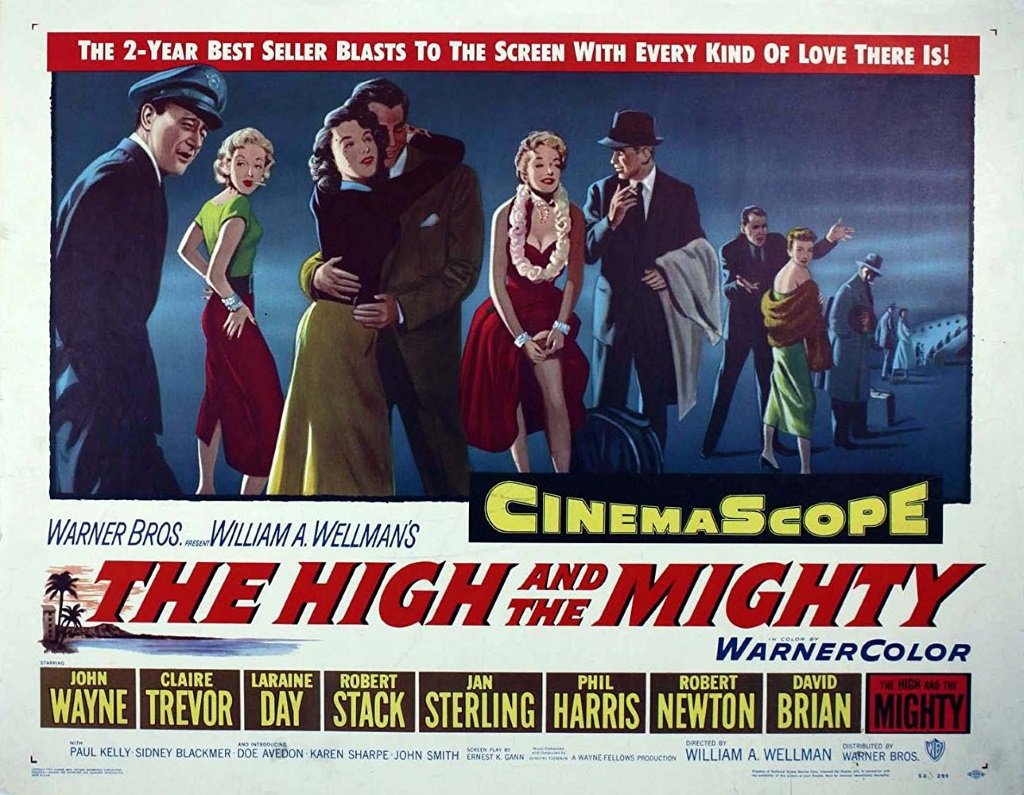
The High and the Mighty (1954), directed by William A. Wellman. Streaming at home, Tuesday, April 4.
I’ve established that Janice and I actually enjoy John Wayne, having had some great luck lately with both North To Alaska and El Dorado, two really entertaining films. Which, of course, on lazy evenings when we’re sick of TV and want some sort of blockbuster that’s not superheroes or sci-fi, can come back to bite us: case in point, John Wayne in The High and the Mighty. This doesn’t deserve a lot of words except to note that it’s the prototype of the disaster film that became so popular in the 70s and then was spoofed to great effect in Airplane! Wayne is a pilot on a plane going from Hawaii to San Francisco, and he’s got backstory (dead wife and kid, plane crash), and, of course, so does everyone else. Jesus, do they: as they do in disaster movies, we have a whole long prologue of backstory: everyone gets their tickets, the ticket taker (played by Douglas Fowley, whom I’ll always see as the director blowing his top in Singin’ in the Rain–“Roll ’em!”) explains every passenger’s place in life and current crises to the stewardess next to him. And if he forgot someone, like the “unlucky” couple who are in Hawaii for the first time, well, we’ll just have some flashbacks. It’s not like anything’s going on in the sky, like the engine being on fire. Problem is, this movie is not over-the-top, and disaster flicks, which are awful (seriously, stop watching these movies people, it’s like celebrating processed American cheese food), have to be utterly ludicrous from start to finish to be even remotely interesting. Nothing in this film works. The humor is DOA, the acting atrocious, the score risible, but I guess aviation buffs enjoy seeing a vintage DC-4 and its cockpit. Unless that fascinates you, run away from this one.
I see in the poster above it states the film has “every kind of love there is…” Would that were so.
As if there’s scores of people reading this who are hungry for John Wayne movies…
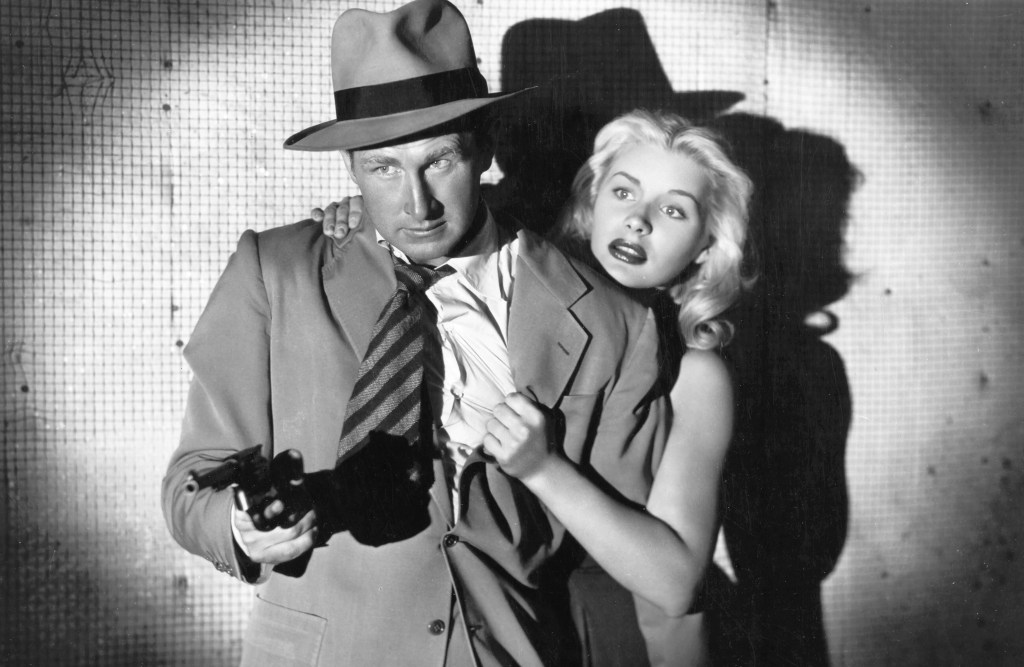
Trapped (1949), directed by Richard Fleischer. Streaming on Kanopy, Monday, April 3.
Trapped is a “B movie”, an Eagle-Lion production, that company being one of the great “poverty row” studios that pumped out some decent noirs. And it’s exactly why I like noir. This was a quickie, an attempt at recouping a small amount of money (by movie standards), a product responding to a need, that need being pictures to fill out the early slots of programming at movie houses, the stuff people sit through while waiting for the big studio film. But someone at Eagle-Lion got the bright idea that maybe they should try to make this thing actually exciting, actually fascinating, and this was a bug that seemed to infect everyone: director, cinematographer, the hungry writers, the actors. Even if they’re Lloyd Bridges and Barbara Payton.
Notorious (1946), directed by Alfred Hitchcock. Heights Theater, Thursday, March 30.
Notorious is arguably Hitchcock’s first masterpiece (though a lot of people would point to Rebecca), and it’s hard to argue with that: anchored by Ingrid Bergman, Cary Grant and Claude Rains, this is a movie of incredible tension, bizarre plot twists and sexual intrigue, and in many ways it has a very modern look at sexual mores. Bergman’s Alicia Huberman is the “notorious” character of the title, a woman willing to give up her body to stop fascism, an easy transition for her since she’s a drunk who likes to sleep around. But that’s what men think–it’s apparent in the movie that Alicia is a very normal person responding to very unusual circumstances, who is taken advantage of and pushed into roles over which she has little to no power. In the end, though, it becomes apparent that there is no one in the picture braver or more honest than she is, and Cary Grant’s T. R. Devlin is finally shamed into coming close to understanding the complexity of this woman he supposedly loves.
You could unpack a lot from this film, write dozens, if not hundreds, of pages about it, but one thing I have to note is God damned Louis Calhern. He was a notable character actor of the time, usually playing sleazy types (never better as the corrupt lawyer in The Asphalt Jungle, the one who keeps Marilyn Monroe as his plaything), but who often played cowardly men or dull bureaucrats. That’s what he plays here–a government man, a Secret Service man in Brazil overlooking this operation. Except that at one point Alicia makes a remark about “that handsome man”, and the person to whom she is referring is him. Louis Calhern. And then she does it again. You can see him above, putting a necklace on her. Yeah, Ingrid Bergman. “He’s handsome” is what Ingrid Bergman says about Louis Calhern. It happens three times, though my brother thought four times. I mean, look at him. He’s standing in a room with Cary Fucking Grant. I don’t know if Louis Calhern had the best agent in Hollywood and demanded being referred to as “handsome” by female leads–I mean, he got paired with Marilyn in Asphalt Jungle, but that’s supposed to reflect what he creep he was.
John Wick (2014), directed by Chad Stahelski. Streaming at home, Wednesday, March 29.
A lot of people love the John Wick movies–this newest one busted a bunch of box office beans and made the critics go wowsa. I really enjoy good action movies and man, it seemed like John Wick would be a good, fun place to go. But I have a lot of questions and stuff after watching this well made but, honestly, kinda boring film.
The Thin Blue Line (1988), directed by Errol Morris (not to be confused with the mediocre Rowan Atkinson BBC comedy). Criterion Collection at home, Monday, March 27.
When I first saw The Thin Blue Line at East Lansing’s Odeon Cinema, it just blew my mind, and I think it really cemented–along with the incarceration of a colleague and murder of a friend, both in the early 90s–my deep frustration about the criminal justice system in America. I currently volunteer as a mentor for the Minnesota Prison Writing Workshop and donate, and maybe someday will volunteer for, The Great North Innocence Project.
The Paradine Case (1947), directed by Alfred Hitchcock. Blu-ray at home, Tuesday, March 25.
I’m watching a lot of Hitchcock because, for whatever reason, the older I get the more I appreciate his movies, and studying them is very rewarding. I’ve seen almost all of his movies, but The Paradine Case was difficult to find. I ended up having to shell out $20 for the Blu-ray.
This is without question the worst Hitchcock film I’ve ever seen. I’m not going to waste too much time on this one, because it’s almost painful recounting it. Gregory Peck is wooden, as is AIda Valli, his love interest and a woman accused of murder. Her character should’ve been played by Ingrid Bergman, but then again, even Bergman couldn’t have saved the awful plot, hamhandedly adapted by David O. Selznick. But it wastes Louis Jordan, Charles Laughton and Charles Coburn (so great in Bachelor Mother and More the Merrier). This movie is tedious and dull, with plot twists that are barely twists leading to a conclusion that I guessed would come ten minutes in.






 Movies with People Watching Movies