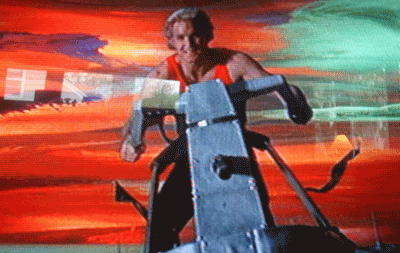
I remember a moment back in 1980, standing in my Grandma’s kitchen, when Dad and Pam came back from the movies (Grandma was watching us kids.) They were ecstatic, or at least he was. “Flash Gordon!” he said. “Well, that was fun!”
“When people see Boudu Saved From Drowning or L’Atalante for the first time, they sometimes ask ‘Was Michel Simon really like that?’ —David Thomson
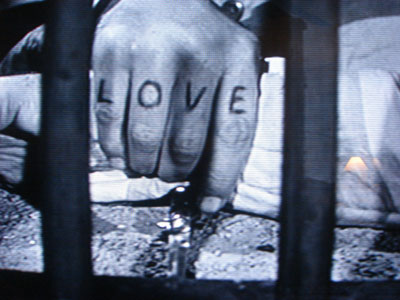
The answer, as Thomson points out, is somewhere between yes and no. Michel Simon is one of my favorite actors, a strange beast of a man, stomping through his movies like some satyr intent on disrupting the proceedings and yet, magically, somehow deferring to others so that his movies remain balanced. When I describe L’Atalante as the story of a man, a sailor, who lives on a riverboat, who marries a woman from the city, and mention that his shipmate is Simon’s Jules, a towering man often wandering about without a shirt, exposing his tattoos, living in the hold with a million strange items (including a pair of human hands in a jar), you’d think he’d steal the picture. But Simon clearly loved his work, and his ego seemed, at times, to be the smallest thing about him. And that, I think, makes him a perfect actor.
How do they do it? The good people who bring us alternative cinema, who plead and entreat their fellow citizens to give up a good day to attend something as magical as The James River Film Festival? Smoke and mirrors, smoke and mirrors, that’s how. For isn’t that’s cinema in a nutshell? Smoke reflecting off a screen, dazzling us and making us forget about life for awhile. A film festival is the same thing, writ large–good people conjuring up amazements with no money, feats of energy on few calories and less sleep, to bring the locals into places they’d never otherwise visit. And the movies! Small, perfect pictures like Jem Cohen’s Benjamin Smoke, ten years in the making, or Celia Maysles’ Wild Blue Yonder, or, for that matter, Orson Welles’ The Lady From Shanghai, which seemed like a good idea at the time, was a disaster, and has since righted itself like a toy ship in a bathtub. Don’t just sit there… well, OK, sit there and read but when you’re done thank your precious deity for these people. I met many of them this weekend. They struggle, look worn and weary and worried. But most of all they look happy. And amazed. If you don’t have those people in your life, well, I feel sorry for you. I really do.
How do they do it? The good people who bring us alternative cinema, who plead and entreat their fellow citizens to give up a good day to attend something as magical as The James River Film Festival?
Salesman (1968), directed by Albert Maysles, David Maysles, and Charlotte Zwerin.
The cruelest merchandise is a talent for which there is no demand. –A.J. Liebling, “People in Trouble”
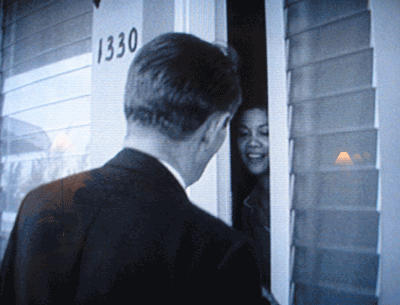
Salesman, the Maysles Brothers’ and Charlotte Zwerin’s profound documentary about roving Bible sellers, opens with a failure. We see Paul Brennan, a slight man, his suit tight in spots and loose in others, lacking a chin and with hands gnarled from arthritis, desperately trying to make a sale. He’s showing off the beauty of his product: a Catholic Press Leather-Bound and Illustrated edition of the Good Book. “Do you think this would be a benefit to you in your home?” he asks. The woman of the home, in curlers, her child hanging all over her, mumbles a “yes”, knowing damn well that any “yes” exposes her limited finances to plunder. But she resists, says she can’t afford the thing, and finally invokes her husband, who is not home to make the decision.
There he was on television again after all this time: Roger Ebert, the movie critic, on the Oprah Winfrey show. By now, movie lovers have seen and heard of Ebert’s troubles. The battles with thyroid cancer, the loss of his jaw, the inability to eat, and the crushing loss of speech. Now he’s left with a dangling lump of flesh and a permanent smile.
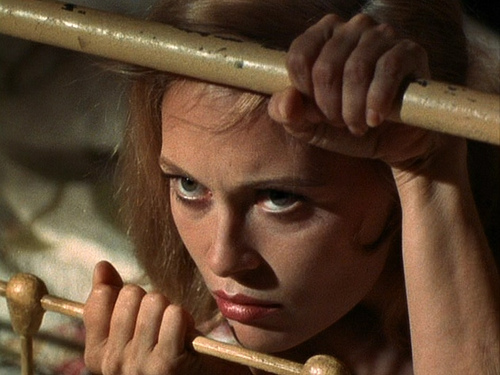
Wow. Faye Dunaway. This is one of the most bizarre careers ever in Hollywood, and it confounds and astounds me. Look at her in Bonnie & Clyde, a whirlwind mass of neuroses, and the girl who makes that Sheriff Frank Hamer (Denver Pyle), blush–she makes us all blush. She’s the heart of Chinatown, the femme fatale who feels the bite of every one of Jake Gittes’ slaps, who carries the whole of that great film’s pain and suffering, and someone who, in the end, makes you feel deeply ashamed to have thought that this broken beauty was so shallow as to be called a femme fatale. In two great movies, Faye Dunaway was sexy, bewildering, riveting.
The Night of the Hunter (1955), directed by Charles Laughton, and, The Night of the Hunter (1953), written byDavis Grubb.
We all know of great novels that have been turned into awful movies. But what about those rare moments when a movie is so good that it overshadows a decent source novel? And then there are those times, rarer still, when a great movie’s shadow casts its darkness over a forgotten book that turns out—surprise!—to be superior in every way to the classic film.
Precious: Based on the Novel Push by Sapphire(2009), directed by Lee Daniels.
Precious is the story of a young woman, all of sixteen, who has been raped twice by her father and given birth to a pair of children from him. The eponymous girl, played with steely determination by Gabourey Sidibe, is beaten by her mother. The girl is overweight. Because of her pregnancy, she must drop out of school and attend an alternative high school in one of the upper floors of a run down New York hotel, which is often surrounded by crack heads. Precious hates how she looks, wishes she were white, wishes she had a light-skinned boyfriend, wishes she was on a Black Entertainment Television music video. She is good at math, but she cannot read. At last, she is HIV-positive.
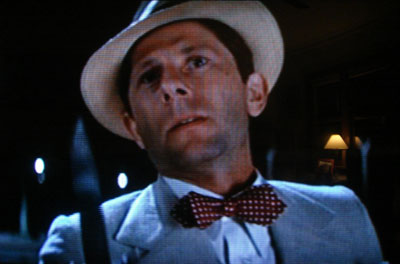
There he is, with his switchblade, talking about nosy little kitties. Roman Polanski, the unnamed assailant, emerging from the shadows. “Who’s the dwarf?” Nicholson’s Jake Gittes asks, nodding at Polanski. The nameless little man is startled, offended. So he puts the tip of the stiletto in Gittes’ nose and jerks it back, slicing open the nostril and sending a shocking spray of blood across Nicholson’s face.




 Movies with People Watching Movies