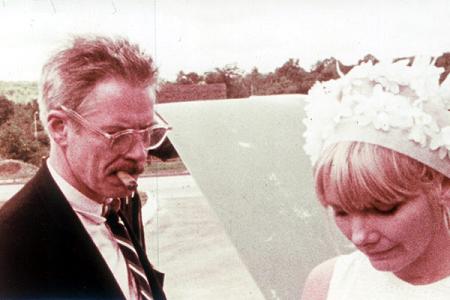
This Week’s Birthday: Hal Needham

No, Hal Needham was not the best director in the world. In fact, his resume in that field reflects some of the worst garbage imaginable, from the Smokey and the Bandit series (though the first one’s a blast) to the execrable Cannonball Run movies, the latter of which I believe isn’t available on DVD thanks to a Geneva Convention ruling.  But Hal Needham was a stuntman, first and foremost, and that’s fascinating to me. Also, I kind of like Burt Reynolds, and two of his great performances in later years–Bill Forsyth’s Breaking In (1989) and P. T. Anderson’s Boogie Nights (1997, and for which he was nominated for a Best Supporting Actor Oscar)–are really owed to his relationship with Needham (but more on that later.)

Continue reading
Cinematic Pugilism: The Chaplin v. Keaton Debate

“Yeah, but they’re both great, aren’t they?” –Anonymous friend of mine, whom I guess is right.

Gary Cooper v. John Wayne. Bette Davis v. Joan Crawford. Robert DeNiro v. Al Pacino. Adam Sandler v. Jim Carrey.

Those battles never existed, did they? Throughout cinematic history, there have been pairs of actors, actresses, comedians and cowboys who thrived at the same time, invited comparisons and often felt a sense of lingering competitiveness amongst themselves. But with critics and geeks there’s really only one raging battle of the movies: who’s the better silent film comedian, Buster Keaton or Charlie Chaplin?

Continue reading

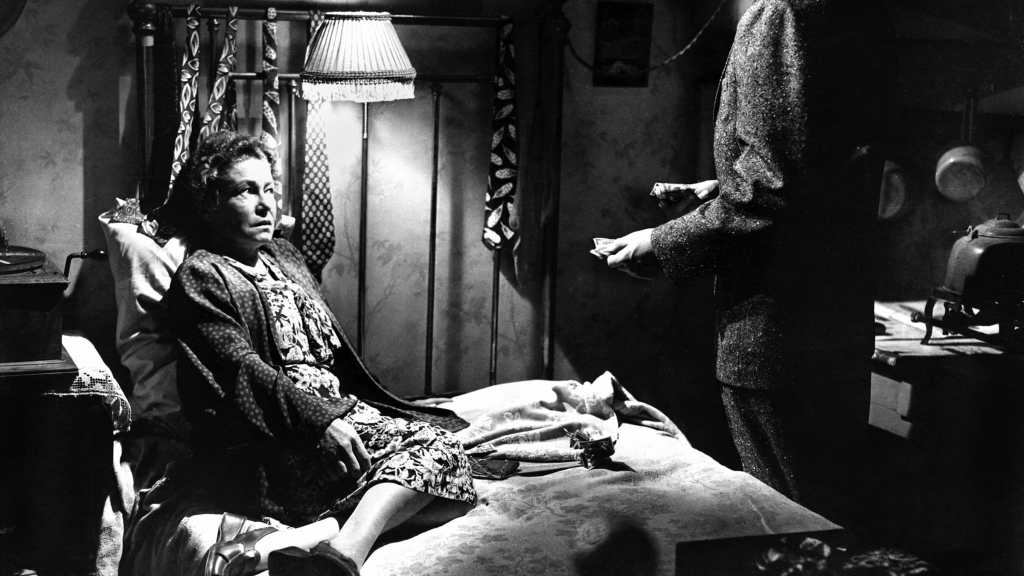
This Week’s Birthday: Thelma Ritter

Jorge Luis Borges once wrote, in the poem “Recoleta Cemetery”, that we mistake the peace of the cemetery for death, when “what we long for is sleep and indifference.” This longing, to let go of the world’s troubles and finally taste some of that sweet indifference, seems to flow through the work of one of my favorite character actors: Thelma Ritter.

Continue reading

Five Film Favorites: One and Done

“One and Done”. What does that mean? It’s actually kind of depressing: five great movies from directors who never made another movie again. At least, they never directed another movie again.

What causes this? All the films here are really great, or they’re tremendously cool, and just miss great. Night of the Hunter is the nonpareil, of course–whenever a critic mentions a director who never made another movie again, pretty much they’re talking about Hunter. My theory is that Laughton was so devastated by the intense critical backlash to his movie that he just didn’t think it worthwhile to try again.

Continue reading

Remembering the Moviegoer

For the Twin Cities film community, Terry Blue was a fixture at theaters around town. You couldn’t miss him: red haired and moving at a clip that suggested he had important places to go (he would probably say that your theater was the most important place at the moment), he would come in, pay for his seat, head into the auditorium to save said seat (which was always the same), and then return to the lobby where he would proceed to hold court over the crowds of people heading in, or his small group of friends. Terry usually bought a Coke; always had a maroon briefcase stuffed with papers of some sort (probably including notes for his Cobalt Blue List, his top 30 movies of the year); and he could be counted on to have opinions–strong, strong opinions–on any and all movies currently playing, movies from the past, movies you’d seen, movies you hadn’t seen, movies you hadn’t heard of.

Continue reading

Am I Blue? You Tell Me…

Blue Valentine (2011), directed by Derek Cianfrance.

Let’s cut to the chase, shall we? I hated Blue Valentine.

But let’s acknowledge something else: I think it might be brilliant, and I’m still trying to get to the bottom of what it’s all about. I watched two hours of searing performances, dreaded moments in the movie, marveled at its direction, even at its conceit, and walked away not only totally bummed, but bedeviled. What is it about? A doomed romance? An abusive relationship? Frankly, Blue Valentine makes me angry, it makes me sad, and it challenges my faith in myself and my fellow movie critics.

Continue reading

One Curmudgeon’s Opinion: The Ten Most Over-Rated Films of All-Time

Being grouchy from both the inanity of the upcoming Oscars and the usual top ten lists everywhere, I found myself playing the list game again, hopefully releasing some of the bile that’s accumulated over the years. A caveat: some of these movies listed below are actually decent. In fact, a couple of these films I’ve enjoyed very much, just not as much as the majority of the world. And time is of the essence, as there is not one film from this year, as it is a film’s staying power that makes it overrated. For instance, I firmly believe that a number of recent titles are overrated, like True Grit and Winter’s Bone, both films faring better at the box office than The Builder and Mid-August Lunch, to name but two. However, time may heal those very public wounds. If they’re still being regaled in fifteen years, then I’ll amend my list. Dogs are left out–everyone knows that Congo is hideous, therefore it’s not overrated.

Continue reading

The Ken Burns Effect

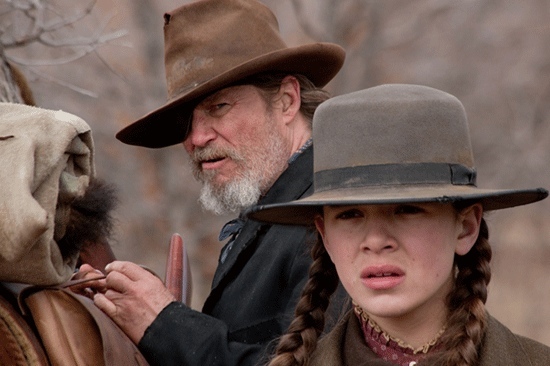
True Grit (2010), directed by Joel and Ethan Coen.

Here’s a question: Do filmmakers have a responsibility to the words that have inspired readers? If you base your movie on a great novel, are you obligated to follow it exactly?

This is a question I struggled with during a screening of the Coen Brothers’ newest flick, True GritTrue Grit is both a remake and a faithful adaptation of Charles Portis’ novel of the same name.

Continue reading

Who’s the Driver? Who’s the Mechanic? A Post About Auteurs.

The auteur theory goes like this: a movie is a director’s vision, it reflects her vision, her personal taste, and she is the “author” of the film (auteur is French for “author”.) Despite the fact that a motion picture is not only a collaborative effort, and in many cases an industrial effort, the theory goes that the director is the creative force behind a motion picture.

Francois Truffaut is credited with this theory, and the influential French magazine, Cahiers du Cinéma ran with it, championing the likes of Howard Hawks, Anthony Mann, and others, men who had toiled under the studio system in relative obscurity, but who, they claimed, stamped their movie with a very personal style. They were auteurs.

Continue reading

The Shattered Soul

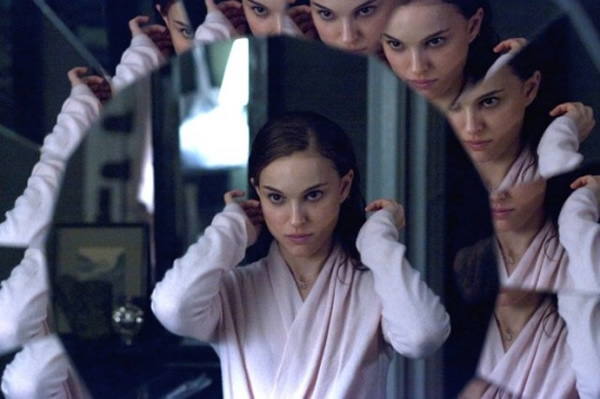
Black Swan (2010), directed by Darren Aronofsky.

There’s a question at the center of Black Swan, and it’s a curious one. My initial impression was that this ballet film would ask us to consider the nature of art, and most specifically: what sacrifices would you make for your art? This pressing question has gotten the better of many a writer, painter, dancer. We see the ruined souls of Raymond Carver, Vincent van Gogh, and here, Natalie Portman’s Nina Sayers as the shipwrecks illustrating just how far people were willing to destroy themselves to be great. But there’s more to Black Swan. Director Darren Aronofsky and writers Mark Heyman and Andres Heinz actually asks us, the audience, a deeply troubling question: is this art, here ballet, so important to us that we’re willing to be complicit in the destruction of said artist?  Are we really willing to destroy some people for perfection?

Continue reading