The Royal Rascals

The Three Musketeers (1948), dir. George Sidney. Streaming at home, Wednesday, June 14.

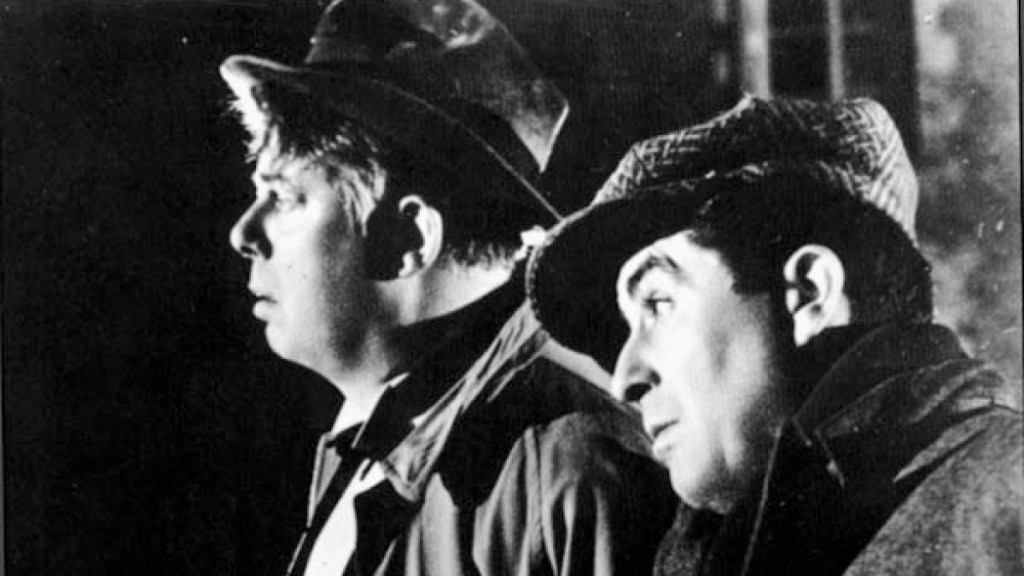
Considering how much I’ve read about Singin’ in the Rain, you’d think I’d have known that the scenes of The Royal Rascal, the movie-within-the-movie at the beginning, were taken from the 1948 flick Three Musketeers, starring Kelly, four years younger. You can see him perform his derring-do on the stairs in black in white in Singin’, or in weird, washed-out Technicolor in the MGM film based on the Dumas novel.

The Three Musketeers is a weird as hell film, one half of which is a delightful and athletic romp through 17th Century France, a France that appears as though it was shot in Louis B. Mayer’s enormous backyard. It’s wonderfully ludicrous, with a bunch of drinking and swordplay and jokes and buffoonery, and the charisma between the musketeers and Kelly’s d’Artagnan is palpable. Then, at about the halfway mark, it becomes less-than-wonderfully ludicrous as the plot complicates in ways that only work in the Dumas novel but not in any other way, and then finally, in the last thirty minutes, it devolves into being annoyingly ludicrous as it becomes suddenly serious and you wonder “what? I’m supposed to care now?”

Continue reading
The Lost World of Helmut Käutner…

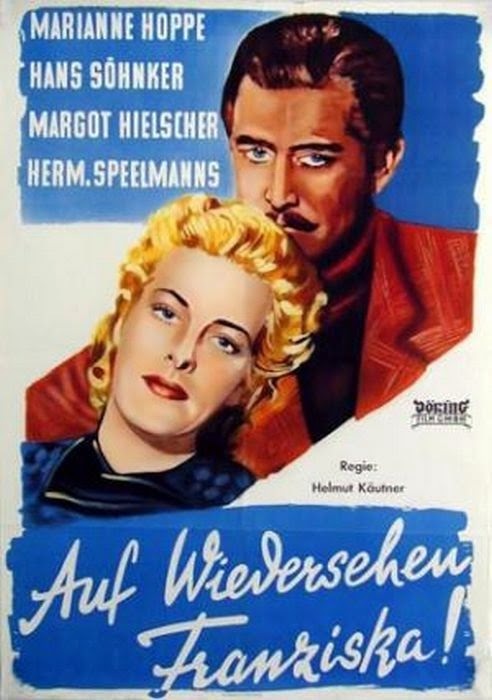
Goodbye, Franziska (Auf wiedersehn, Franziska!) (1941), directed by Helmut Käutner. DVD at Tom’s, Monday, June 12.

…sometimes, perhaps often, produces mediocrities like Goodbye, Franziska. The director of Romance in a Minor Key and Great Freedom No. 7 (both great) was a Nazi-era filmmaker whose work often flew in the face of censors and the government. Here, the story of the eponymous woman falling in love with a photojournalist who must abandon her regularly had a tacked on ending that infuriated the director. The ending is very pro-war, and pro-Nazi. It’s interesting because, in some respects, American studios would never allow a story of a woman who is in love with a dude who impregnates her and refuses to get married to her until much later. I mean, they’re not married and they have a kid. For a long time. And in this movie that’s only bad in an emotional sense, but not in a moral or legal way, which wouldn’t fly in America until maybe the 1970s. Also, Käutner directed stunning bar scenes throughout his career–Great Freedom No. 7 is almost nothing but–and here there’s a fascinating moment in a bar in China filled with Black actors. I want to hear the story of being a Black German actor in the 1940s. Because the film is pretty haphazard and makes no sense, that was honestly all I could think about.

Ennio Morricone Kills

Two Mules for Sister Sara (1970), directed by Don Siegel. Streaming at home, Friday, June 9.

As noted, Janice and I really like Clint Eastwood when he’s in front of the camera and his films are good. Honestly, he made a lot of pretty great movies. Two Mules for Sister Sara isn’t really one of them, though it would’ve been a ton better, decent maybe, if Shirley MacLaine wasn’t in it, ruining nearly every scene. She is so miscast it’s not even funny.

Continue reading

Preston Sturges Strikes Out

Unfaithfully Yours (1948), directed by Preston Sturges. Criterion DVD at Tom’s, Tuesday, June 6.

I love Preston Sturges movies, or should I say I love his good movies, because when he fails he comes very close to being an exhausting joke machine along the lines of Jerry Lewis. Case in point: Unfaithfully Yours.

Rex Harrison (mistake number one) plays conductor Sir Alfred de Carter, who is married to the beautiful Daphne de Carter (Linda Darnell). She is mistake number two. Not Darnell, but Daphne. See, the conductor adores his wife, until his brother-in-law, August Henshler (Rudy Vallée) hires a detective to follow Daphne. He did this because Alfred asked him to “watch over his wife”, meaning to take care of her while he was away, not have her followed. Well, the detective finds some hanky-panky going on, which everyone but Alfred knows is not really hanky-panky, but a simple mix-up.

Continue reading

Renoir’s Masterpiece Eludes Me with Every Viewing

La règle du jeu (Rules of the Game) (1939), directed by Jean Renoir. Heights Theater, Thursday, June 5.

Renoir’s Rules of the Game is, by all critical accounts, one of the greatest films of all time. If you look at the Criterion DVD, inside the booklet there’s a number of pages of testimonials to this fact, of filmmakers gushing over its greatness. The story of the film’s release is at once heartbreaking and triumphant: how, in 1939, as the world was being swallowed by the Nazis, Renoir’s scathing attack on the bourgeoise was loathed by critics and audiences alike and then cut to pieces by a studio hoping to recoup its losses–I guess it was insanely expensive to make, though I don’t know why. Then, later, years later, the young Left Bank filmmakers in the 1950s pieced together the original and screened it at the Venice film festival where it was, almost instantly, proclaimed as one of the greatest films of all time. I mean, like, right away.

Continue reading

The Cluny Brown Show!

Cluny Brown (1946), dir. Ernst Lubitsch. Blu-ray at the Trylon microcinema, Wednesday, May 31.

To celebrate my 55th birthday, I decided to rent the Trylon microcinema and screen Cluny Brown to a crowd of friends. I was going to say “delighted friends”, because it was my hope-against-hope that the crowd would be delighted, as I was. But I’ve screened it before to friends, with mixed results. But it was my birthday, I paid for the place and so beggars can’t be choosers, right?

Continue reading

Derailed!

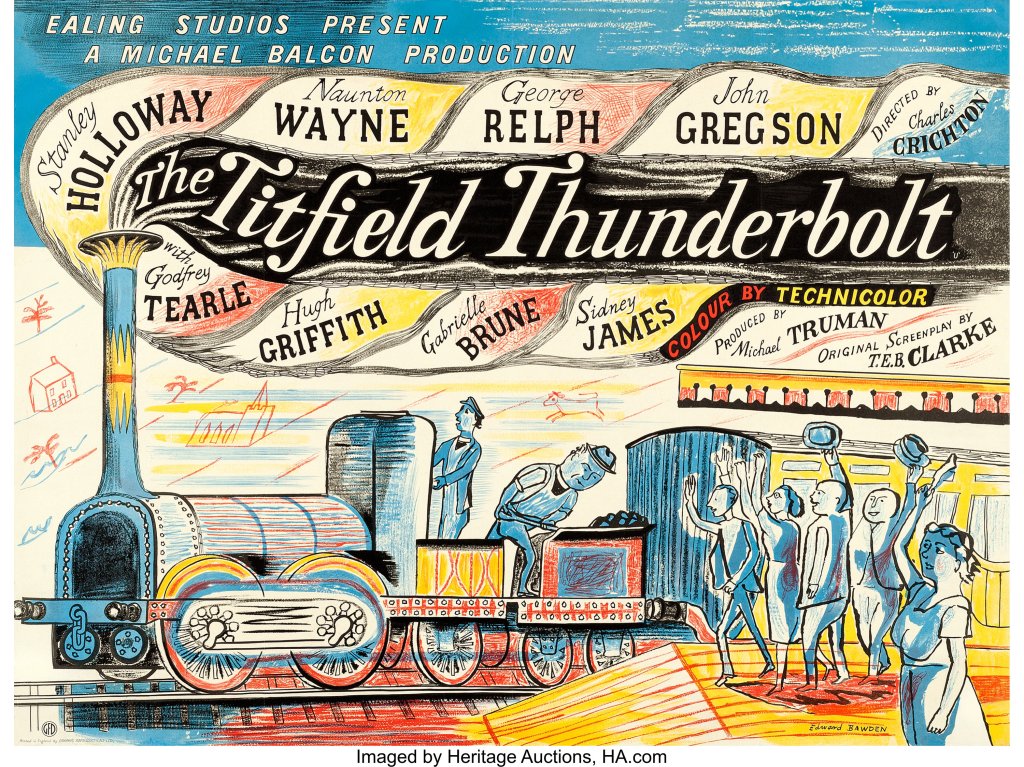
The Titfield Thunderbolt (1953), directed by Charles Crichton. English blu-ray at home, Thursday, May 25.

God damn it, The Titfield Thunderbolt. I wrote recently of Ealing comedies, and how the very best of them are really fun but kinda shallow, very pleasant and never truly dark or edgy. Problem is, when they’re not great they tend to be less than moderately entertaining, too cute by half, and then utterly forgettable. But The Titfield Thunderbolt! Holy shit, this movie starts off as a pleasing little movie and then goes right off the rails, literally and figuratively. Its terrible ending makes this a pretty bad movie.

Continue reading

The Small Moments in a Big Action Film

The Bourne Identity (2002), directed by Doug Liman. Streaming at home, Tuesday, May 23.

Why would we watch The Bourne Identity? Three reasons: we were bored and wanted some fun action, my brother John said that it really held up, and it was directed by Doug Liman, who made the totally awesome Edge of Tomorrow, that one with Tom Cruise dying over-and-over (it’s really great). Bourne was fun, and I was so surprised at how old it was–the internet was in its infancy, no real cellphones to speak of, people find out information from newspapers. The film suffers because the plot, the maguffin, is just ludicrously dull. I mean, I can barely even remember it, but it’s really complicated and banal and actually requires explanation, which is just plain bad. But it succeeds in its cool action, its actors (Matt Damon, Franka Potente, Chris Cooper, Clive Owen and Brian Cox), its locales, from warm to cold to warm to cold (islands and Berlin and Greece, it’s so damn continental) and from all of the small moments, most notably Clive Owen’s death scene in a field. Every home and locale looks lived or worked in. It’s tough that Liman made this and Edge of Tomorrow and what looks like nothing else worth visiting, because those are two damn fine action films on which to hang your career.

Dial M for Monotonous

Dial M for Murder (1954), directed by Alfred Hitchcock. Streaming at home, Saturday, May 20.

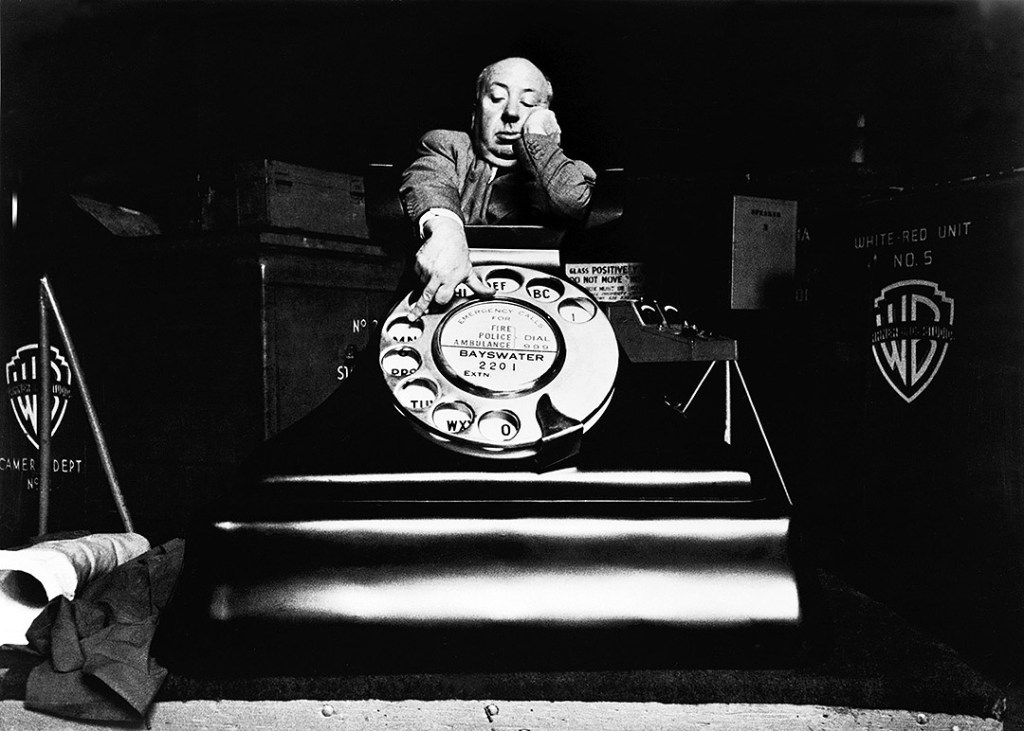
About 3-D and specifically his one foray into that technology, Dial M for Murder, Hitch said, ““It’s a nine-day wonder, and I came in on the ninth day.” There’s a few spots where you can see people reaching at the camera, I imagine to make that image pop out at you. The above photo shows the giant phone they had to throw together, as Hitchcock felt that he had to get a close-up of Ray Milland’s finger dialing M. I mean, he didn’t need to, but he did–but the 3-D cameras were so big they couldn’t get in close enough. Thus, a replica of both phone and finger were made. This dreary film does boast one remarkable scene, where Tony Wendice (Milland, who’s a bore) has lured a crooked old school chum, Captain Lesgate (Anthony Dawson), to Wendice’s home under the guise of buying a car. He then slowly but methodically reveals his true motives, that he knows that Lesgate is a crook, that he knows Lesgate is in dire straits, and finally, that he knows that Lesgate is going to agree to croak Wendice’s wife, Margot (Grace Kelly). Once that scene is over, the plot unfolds like a clunky machine, and the whole thing looks like rote English theatre that appealed to suburbanites and amateur thespians.

Dig Those Ships, Costumes, Fake Snakes, and Stars!

Cleopatra (1934), directed by Cecil B. DeMille. Criterion Channel at home, Tuesday, May 16.

Yeah, OK, Cecil B. DeMille. Good friends suggested his 1934 Cleopatra, made right as the Hays code was getting underway. So it’s sexy, with a bunch of double-entendres and perhaps the most unhinged sex scene from a major studio in a major film. That’s the one where Cleopatra and Marc Antony embrace as five-story silk curtains close over them and the camera tracks backwards past enormous golden oars pump in sexual rhythm to the house-sized drum beating time. Holy shit.

Continue reading