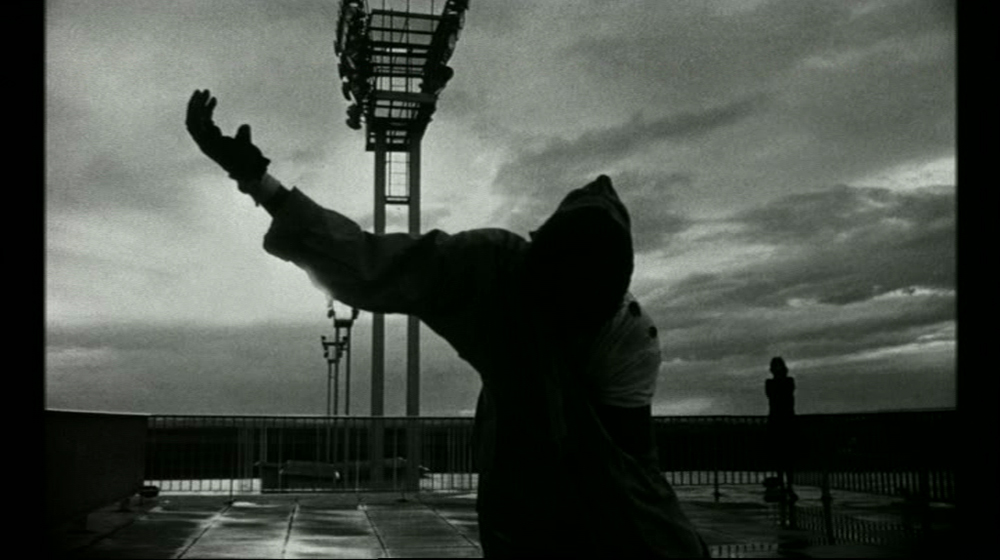
Sans Soleil & La Jetée

Imagine sending a spacecraft to the stars, hoping to connect with some distant, nebulous life-form, and you had to choose a single movie from this planet to represent all of world cinema. What would your choice be for this Voyager III? Would you play the classics game, shipping a Citizen KaneLa Règle du Jeu, one of the Howard Hawks westerns? Maybe a Ken Burns documentary, perhaps some rah-rah propaganda from the ranks of Frank Capra or Walt Disney, or the manic comedies of the Marx Brothers or Chaplin.

Continue reading
Conversations Real & Imagined: The Last Picture Show-er

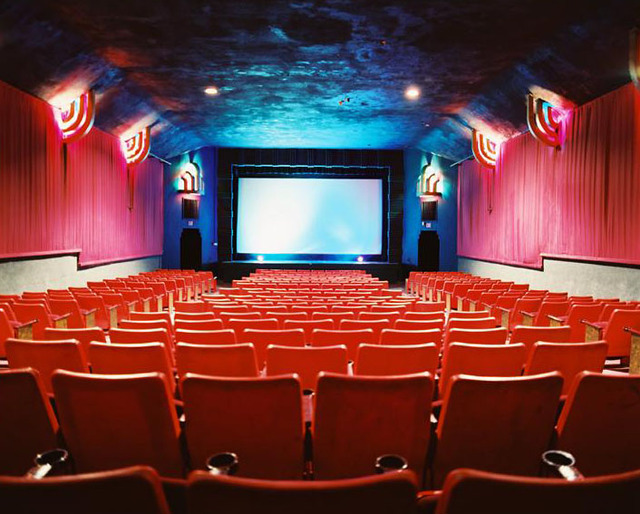
Local 219 of the International Union of Showbiz and Theater Entertainers was recently called to order over breakfast at the Edina Perkins. Bob Anderson, at seventy-nine still an imposing presence with broad shoulders and a strong handshake, pushed his omelet aside, pulled out some notes, and addressed his audience—myself and a waiter.

Continue reading

When Worlds Collide

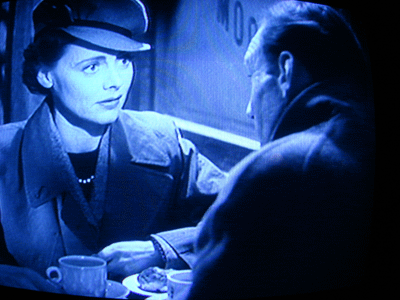
Brief Encounter (1945) directed by David Lean.

Sometimes it helps to escape a blue weekend with a mindless comedy, some blood and gore, or a spectacular adventure full of explosions. To wander into the local Cineplex with twenty bucks, grab your ticket, and check out from life for two hours. Look around you: every theater has its share of time-wasters, a brief moment in the darkness to distract you from the weight of the world. Sometimes, that is what movies are for.

Continue reading

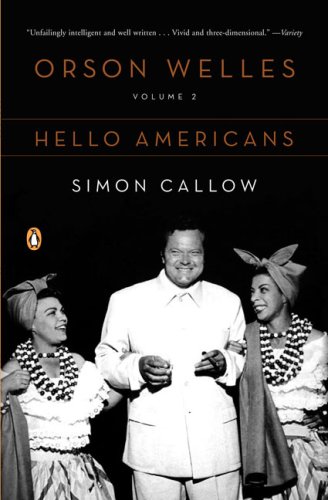
The Bottomless Welles

I was ten years old when I first saw Citizen Kane. My father hauled my brother and me to the enormous Temple Theatre in downtown Saginaw, Michigan, and with a crowd of maybe two dozen, we noticed that Kane was more than just a chapter of film history; it was hilarious and melancholy and eminently bizarre. Like the eponymous boy in The Little Prince (which Welles at one point adapted into an unfilmed screenplay), Charles Foster Kane is less William Randolph Hearst and so much more the young Orson, bouncing from experience to experience in his fruitless quest for true love. Here was a curious and melancholy figure, trying desperately to hold on to his childhood as he grew older. Just like the rest of us. Or so I thought.

Continue reading

Man of La Mancha

Teeming with beautiful people who routinely burn beds or weep openly out on its streets, Pedro Almodóvar’s Madrid is a strange and magical place. Exploding in color, it is a city subjected to a constant torrent of emotion and deceit churned up by outrageous women and handsome but impotent men. The Spanish capital—where all his movies save his newest are set—is a place that makes the real world seem destitute by comparison. Watch one of his films and then ask yourself: Why aren’t Almodóvar’s people wandering our streets? Where are the transsexual whores who mingle with the city’s top actresses? The paraplegic cops who sleep with and marry heroin addicts? The babies who are born on city buses, squalling while midwives bite their umbilical cords free? Almodóvar might say that they are everywhere we can come under the spell of a movie. Like the aged Don Quixote transformed into madness by his romances, his coterie of oddballs is enriched by films, even as they try to live up to cinema’s impossible fantasy.

Continue reading

Hollywood Hit ‘n’ Run

Though it now seems long ago, it’s only been a few weeks since a brace of bona fide Hollywood stars descended on downtown St. Paul. The city was abuzz with famous people and the regular folks who admire them, but nothing rivaled the enthusiasm of the international, domestic, and local press. Since this was, after all, the national premiere of a major motion picture, a full-scale, Hollywood-style press conference was set up inside the Saint Paul Hotel. There were dozens of lensmen, talking heads, beat reporters, stringers, and hacks in attendance. There were big-timers from organs like People magazine and the Associated Press.

Continue reading

Conversations Real & Imagined: The Old Married Couple

Tom Letness could cease his never-ending renovation of the Heights Theatre, in Columbia Heights, and it would remain the finest movie house in the Twin Cities, bar none. Yet he keeps fiddling with it. He knows its history inside and out—from a bombing back in the late twenties at the hands of a disgruntled former projectionist, to its dark days as an ugly second-run theater. As the theater’s current owner, operator, and sometimes beleaguered caretaker, he’s also familiar with all its quirks and charms in its present-day incarnation. Letness didn’t have to dig out the orchestra pit or hire an organist, but he did. He didn’t have to put 152 hand-painted reproduction Edison Mazda bulbs in the chandeliers, but he did. Bringing in the Wurlitzer organ and finding someone to play the thing wasn’t easy, but he did it.

Continue reading

Conversations Real & Imagined: Earned Obsolescence

There’s usually no problem finding a good movie to see in the Twin Cities—between the imperiled Oak Street Cinema, the Heights, Walker Art Center, and Landmark Theatres, there’s plenty to choose from that doesn’t insult one’s intelligence or batter one with sound and C.G.I. Sometimes, though, you get the urge to shut down your brain and settle in with something genuinely awful. For the worst, most bizarre—and by their very nature obscure—movies in history, there is no better local source than Joel D. Stitzel’s Cinema Slop, the eccentric movie program that screens the second Tuesday of every month in the Dinkytowner Cafe.

Continue reading

Curtain Call

Robert Altman didn’t see much of Minnesota. During his month-long stay in St. Paul this summer, he ventured beyond the Fitzgerald Theater and his hotel but once or twice. He came, though, and even if he didn’t see much, it seems as if he was out to conquer. He left for Hollywood with footage for a film in which, reportedly, the Fitzgerald Theater gets demolished, at least one character dies, and, most important, our beloved public radio program ceases to be. Who is this guy? And what does he want with A Prairie Home Companion?

Continue reading