We Are the Best! (20140, directed by Lukas Moodysson.
When you go to the theaters this summer, you could seek heroes that go flying about in tights and capes straight from the pages of DC and Marvel comics, saving the world from bad guys that look a lot like they do. You could watch the planet get ripped apart by Transformers or Japanese monsters, run from CGI apes, chortle at comic cops, or weep while beautiful people battle life-threatening diseases.
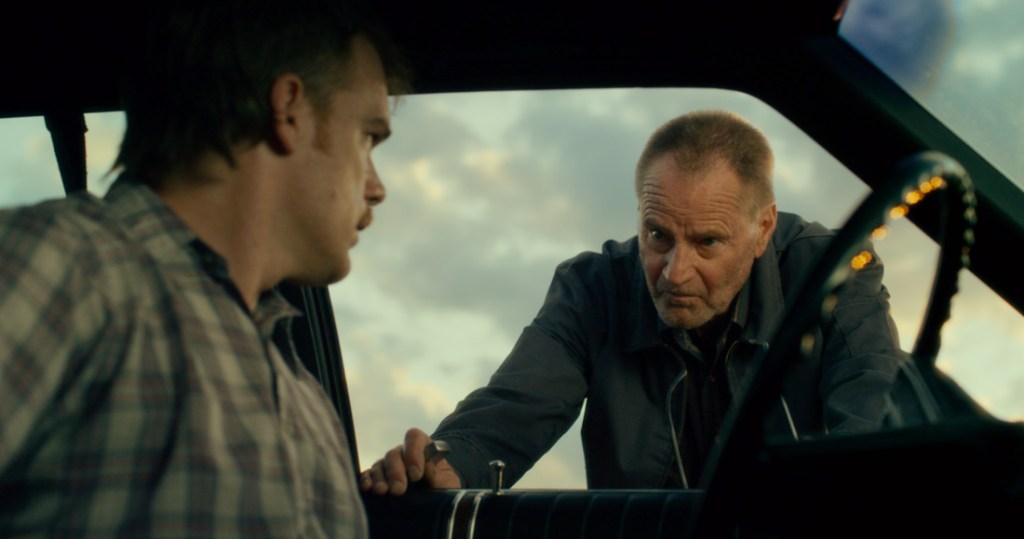
One evening in East Texas, in the last year of the 1980s, a burglar breaks into a home. The homeowner, a mulleted, buff, though clearly baffled man nervously digs up his revolver (his hands shake as he loads the thing) in order to protect his wife and child. As the homeowner creeps into the living room, he sees the shadow of man ransacking his living room. Shots are fired. The burglar is dead.
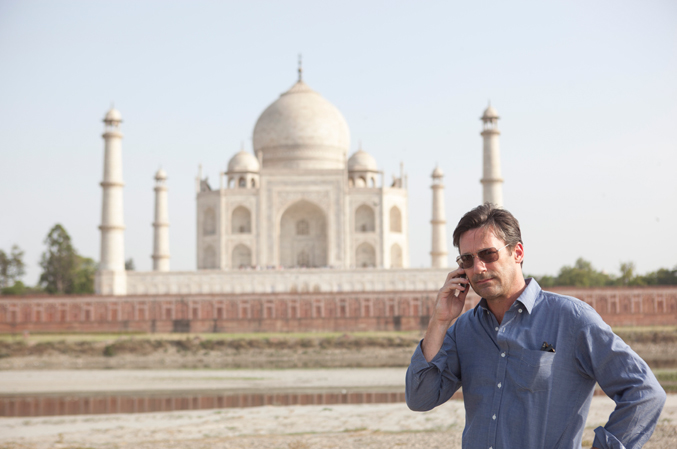
Million Dollar Arm (2014), directed by Craig Gillespie.
For some reason, Hollywood loves baseball. The nation’s pastime, unlike football, hockey, basketball, and soccer, manages to find its fictional way onto the silver screen virtually every year. There are very few blockbusters—last year’s mediocre 42 shocked everyone when it pushed past the $100 million mark—but the fans eat them up.
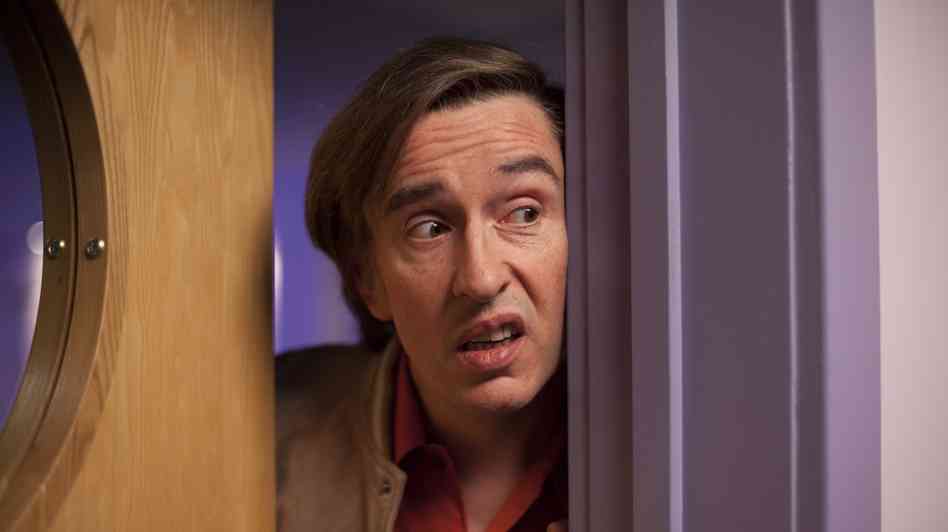
British television comedy can be either hit or miss here in the states—on the one hand, you’ve got the legions of Python fans, endlessly repeating their favorite lines from movies and the BBC TV show (full disclosure—I’m one of these.) On the other hand, you have the critical and commercial failures (at least in America) of Mr. Bean, The Inbetweeners, and now, Alan Partridge. What makes these English language films—reliant as all comedy not just on wit but physical humor and ribald jokes—succeed or fail?
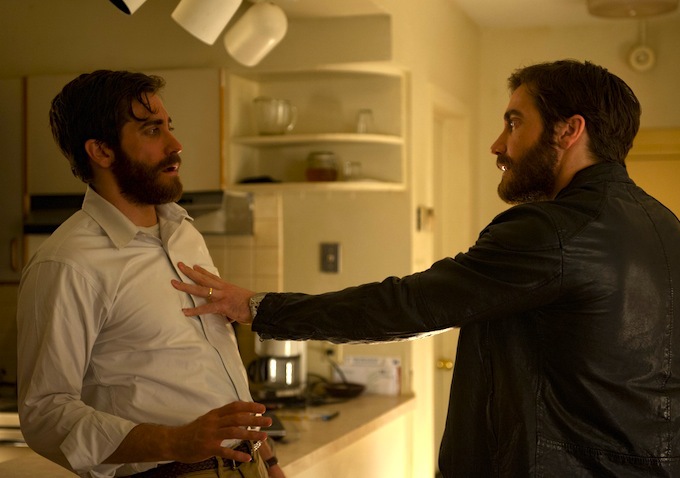
That quote, from José Saramago’s source novel The Double, might have been a clue that led readers to scour his complex book, searching for clues. For viewers of Denis Villeneuve’s shallow Enemy, which offers that tidbit to viewers toward the beginning of the film, it serves as a way of telling (as opposed to showing) the audience that there’s more than meets the eye…even if there’s a lot less than meets the eye in this one.
To suggest that bad people were racist implies that good people were not. –Patricia A. Turner, “Dangerous White Stereotypes“, a commentary article in the New York Times about The Help.
If there’s one thing I took from Brian Helgeland’s hagiographic 42, it’s that Jackie Robinson wasn’t actually a real person. Like the computer generated baseball diamonds that appear as if they were freshly painted in oils on a giant canvas, this Jackie Robinson is all shiny nobility, standing in the face of scowling, beer swilling southerners. That his life was perfectly delineated between those white folks who wanted him out of baseball and all the good ones who helped him along. Like a desktop calendar, lessons were learned every single day.
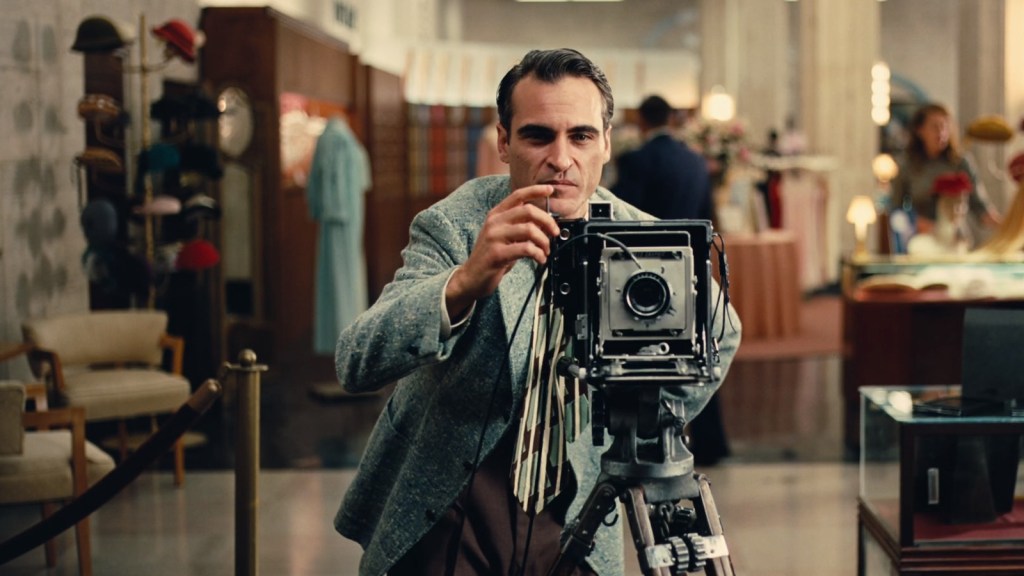
The Master (2012), directed by Paul Thomas Anderson.
There are favorite movies and then there are movies, good and bad, that leave such an indelible impression that they’re affixed, permanently, in a sense of time and place. I remember, clearly, the days and the theaters when I witnessed, for the first time, Star Wars, The Cotton Club, Blue Velvet, Cronenberg’s The Fly, Pulp Fiction and There Will Be Blood, among many others. Some of those are masterpieces, some are merely spectacles that I’ve outgrown (you can guess that one), and some were merely wonderful diversions.
Paul Thomas Anderson’s The Master is another, and it fits squarely in the category of a great movie that has also crystallized in my mind the time and place where I first watched the thing–a sunny morning at the Lagoon Theater in Minneapolis. And I honestly can’t remember when I’ve entered a movie with such high expectations and watched in rapture as those lofty preconceptions were were met and exceeded. Though it is not without flaws–or perhaps it is better to say it is not without its profoundly perplexing moments–The Master is a cinematic marvel, one of the most beautiful films I’ve ever seen, and a searing document about a man at odds with himself.
As a sometimes film programmer for the Trylon microcinema, a great little theater in Minneapolis, I’m always thinking in terms of building series around themes, titles, and, of course, actors and actresses. The latter are my favorite: in the past, the Trylon’s screened the best movies of Bette Davis, Jack Nicholson, Jimmy Stewart’s westerns, and, this month, the whole of Marlene Dietrich’s work with Josef von Sternberg.
When we have movie conversations about silly things, you know, like any discussion about the Academy Awards, my mind turns to programming. As Meryl Streep is about to win her third Oscar, or become, for the umpteenth time, the bridesmaid to the little gold man, I think to myself about a Meryl Streep series. Thing is, there’s a problem. And that problem is this:
There are blessed and brief moments in human history where people gather to form an organic unit–a team, a company, a troupe–that performs wonders. Often, the individuals didn’t know they’re special; often, they were not special, but thrived in the group, coming fully alive for the first time.
The 1927 New York Yankees. The Founding Fathers. The Mercury Theater performing Caesar, Macbeth, War of the Worlds, and finally, Citizen Kane. Insert your favorite band here.
We watch, lucky to witness these spectacular convergences. And, oh, to actually be a part of one of these blessed aggregates! But that is too much to ask for, generally. So we must be content to bask in their sun-bright presence.
The end of every year sends movie critics scrambling to play the list game. You know, where we comb through that year’s titles for the privilege of allowing a select few a spot on on our “Top Ten” list. Those lists serve as a way of telling people “I love this movie!” as well as signaling our superiority by keeping certain flicks off . Because a guy who made exactly zero dollars on his film writing should be able to lord over Terrence Malick now and again, right?






 Movies with People Watching Movies