Christmas in Connecticut (1945), directed by Peter Godfrey, written by Adele Comandini and Lionel Hauser from a story by Aileen Hamilton.
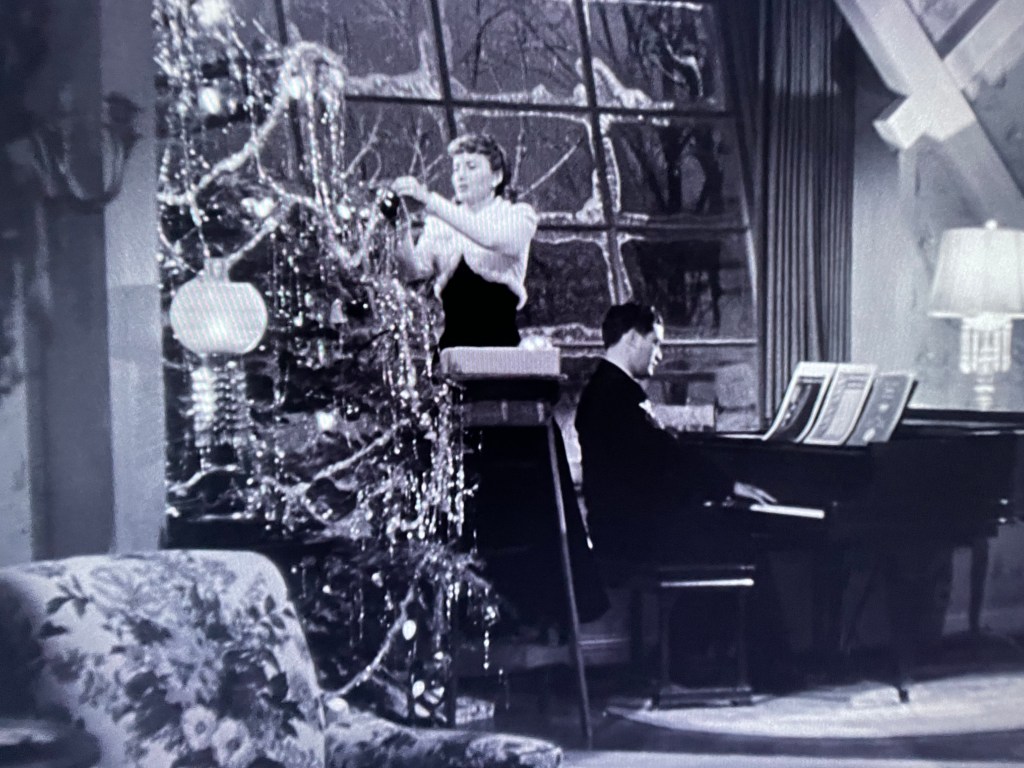
Every year over the first weekend in December, Janice and I spend an exhausting weekend making her incredible chocolate truffles, then we order a pizza and watch Christmas in Connecticut. It’s a delightful cinematic confection starring Barbara Stanwyck, Dennis Morgan (whom Janice adores) and great character actors, including S. Z. “Cuddles” Sakall. It concerns a woman who writes about food but can’t cook, falls in love, and the trouble she gets into on Christmas.
Here’s how this romantic and heartwarming comedy opens:
In the cold Atlantic, a Nazi submarine torpedoes an American destroyer. Hundreds of sailors perish from burning alive, sustaining blunt-force trauma from the shock waves or being torn apart by shrapnel. Those who survive the attack freeze to death or drown in the cold waters. Two sailors, Jefferson Jones (Morgan) and Sinkewicz, aka “Sinky” (Frank Jenks), make it to a small inflatable raft. They dream of eating luxurious food. Jones, Sinkewicz’s superior, offers up his last K-rations in an attempt to save his friend. They are on the raft for 18 days, over two weeks, with little or no sustenance.
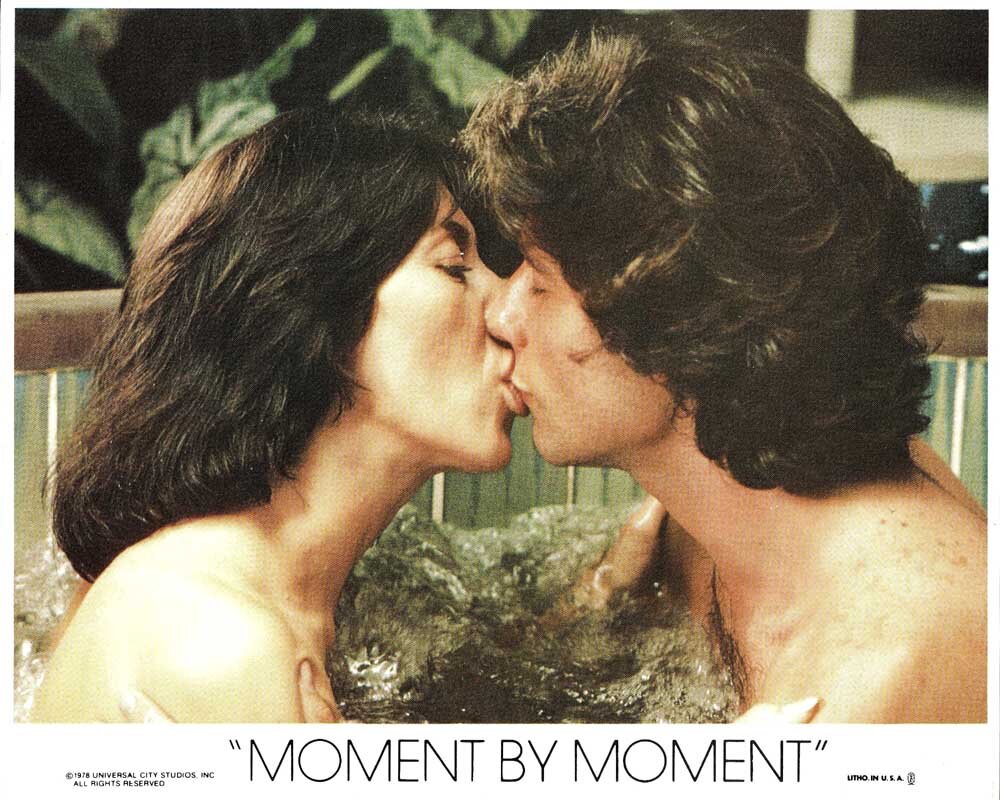
I’ve always found it baffling how much people love awful movies. We tend to avoid terrible books and TV shows–perhaps books are too long (though you could read The Bridges of Madison County in two hours, and it’s up there with the worst) and TV shows date too quickly? Maybe it’s because there are so many terrible films–every year bombs that are dropped from Hollywood’s zeppelin onto a (usually) suspecting public: only the greatest gluttons for punishment endure The Conqueror, Doctor Doolittle, At Long Last Love, Clan of the Cave Bear, or John Carter from Mars, to name but a few. As someone who does not find any pleasure in watching “they’re so bad it’s good” flicks or enduring the rarely funny (to me) Mystery Science Theater 3000, I usually end up avoiding these turkeys. So how did I end up watching, with my friend Tom, the wretched Moment by Moment, starring Lily Tomlin and John Travolta?
Moment by Moment has always intrigued me simply because its very existence seems so strange. I get the appeal of making a piece of shit like 1967’s Doctor Doolittle–a popular, albeit racist children’s “classic” gets the bloated musical roadshow treatment, and voila! Money in the bank, usually. But who thought to take Lily Tomlin, so great in Nashville and other films (not to mention theater and TV) and pair her with that dancing heartthrob John Travolta? I remember the film being in the background of my cinematic consciousness in 1978, for I was in Southern California (where Moment takes place) that year, Grease was huge, kids I know were batty about Travolta and then… this?
Whenever Citizen Kane comes to town (as it is tonight at the Heights Theater, in glorious 35mm), people are usually surprised to hear me say that this is my favorite movie. Everyone has a favorite movie, but when I mention this one is mine, I get odd looks–you really like The Greatest Film of All Time? This certainly adds to the reputation I have for being a pretentious jerk who can’t enjoy fun movies, which is perhaps true. But I tell you, Citizen Kane is fun, so much fun.
Kane was meant to be fun. It was meant to be a rollicking entertainment, much like Welles’ great stage productions: thrilling, heartbreaking, sexy, heroic, romantic, tragic… all the things I assume you find in superhero movies, except in this case the superheroes are young actors who often wear make-up that is intended to make them look old. They’re having a blast making this movie, and if you can go in thinking of this as a romp, as a critique of power and the arrogance of old age, as a story of a hope and then disillusionment, you’ll enjoy yourself. I was lucky: I first saw Kane when I was 10, and didn’t know I was seeing the G.O.A.T.; I was just watching a bizarre black and white movie at a monstrous movie palace that was a far cry from the sterile, cinderblock mall theaters I was used to.
On that first magical viewing, Kane wasn’t a story so much as an experience, a marvel of insane black-and-white cinematography and odd, often contorted faces, and those rooms, the dark and shadowy rooms where secrets were kept. Cramped offices, expansive mansions, seedy bars, apartments filled with bric-a-brac. So little of it takes place outdoors–it’s all a movie set, adding to its fractured reality. And sadness, so much sadness—I’d never seen this in a movie before, other than maudlin Disney films like Old Yeller or the crocodile tears of Star Wars, when someone dies but usually comes back to life somehow, either as themselves or some weird ghost whose destiny is to coach the living. The only thing that made sense to me at that age was to compare Kane to The Little Prince, because as much as I loved Saint-Exupery’s story, it was the saddest thing I’d ever experienced. In Saint-Exupery’s book, the Little Prince visits despondent adults on their barren asteroids, watching them grind through their existences, leaving the young boy baffled at the isolating worlds of adulthood. In Kane, so, too, does the reporter Thompson wander to these figurative asteroids, trying to get the bottom of Charles Foster Kane, the saddest and most foolish adult there was. And in the end: fire.
Singin’ in the Rain (1952), directed by Gene Kelly and Stanley Donen.
“Kids…,” said Irving [‘Swifty’ Lazar, their agent], “My suggestion is you write ‘Singin’ in the Rain’ at the top of the page, followed by ‘Fade-in’, and don’t stop until you come to ‘That’s all, folks.'” So we began working on Singin’ in the Rain like rats trapped in a burning barn… —Betty Comden and Adolph Green
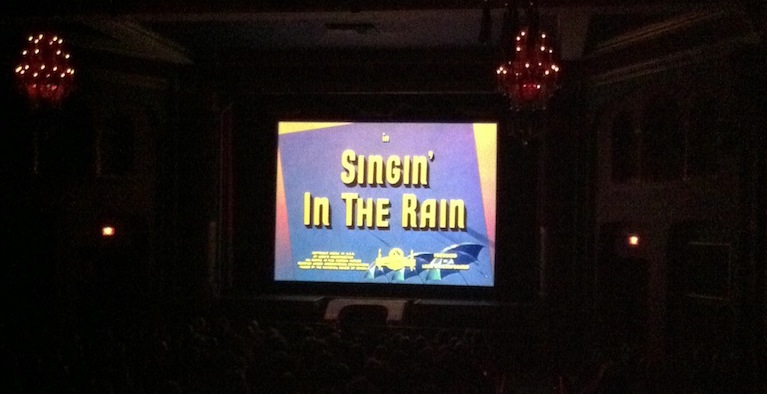
There’s a fantasy I like to indulge in now and again, in which a person, usually a young person, maybe two, maybe a young couple madly in love or in the first bloom of a relationship, walk by a gorgeous movie theater like the Heights Theater and say “maybe we should catch a show?” Shrugging, barely bothering to see what’s playing, they buy a ticket. “Singin’ in the Rain,” the young woman remarks. Neither of them have seen it, but both are intrigued.
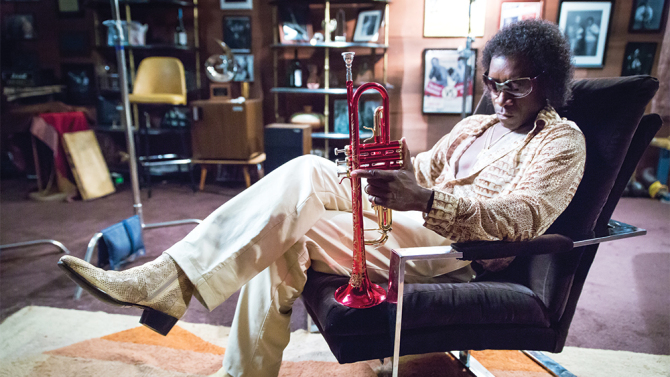
For whatever reason, 2016 is seeing a glut of musician bio-pics: Hank Williams Sr., Chet Baker, Nina Simone, and Miles Davis are all getting the Hollywood treatment. Thinking back on this genre, it occurred to me that you could count the number of great movies about musicians on one hand, and that hand would have to be without fingers or clenched in a fist (though I am a sucker for Amadeus.) It makes you wonder: what do filmmakers think of when they seek to make a film about the life of a popular singer, other than dollars? Obviously, there’s an admiration of a great talent, which begs the question as to why so many of these movies seem so bereft of skill, much less imagination. If I had to hazard a guess, I’d imagine it’s the same desire that prompts people to want to make movies from books—if a musician’s life is a great story, why, by all means, transform it into a great movie.
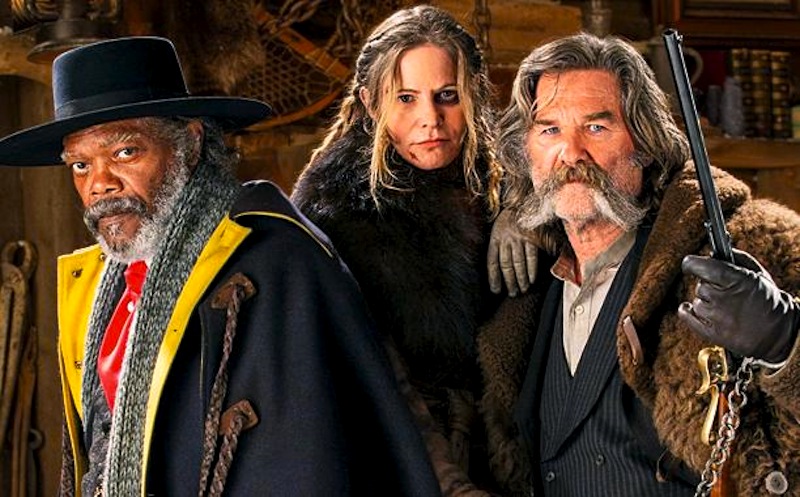
The Hateful Eight (2016), directed by Quentin Tarantino.
Noting the near absence of rating stars above, the reader can be forgiven thinking that this reviewer loathes Quentin Tarantino. Tarantino’s work is certainly controversial, certainly has its vocal critics (perhaps most notably Spike Lee), and seems at times to be created almost deliberately to divide moviegoers and scribes. But know this: I’ve enjoyed tremendously the man’s last three movies, and put Inglorious Basterds and Django Unchained on my top ten lists, the former as my favorite picture of that year. But Hateful Eight is different, Tarantino fans—it’s dull, it’s offensive only for the sake of offense (and even then, barely so), and, perhaps worst of all, it’s a “message” movie.
Comedian Amy Schumer has seen her star rise as fast as anyone in the history of American comedy. Having moved swiftly from the ranks of small-time stand-up to runner up in a pair of televised comedy contests, she hit it big with her show Inside Amy Schumer, a mainstay of Comedy Central.
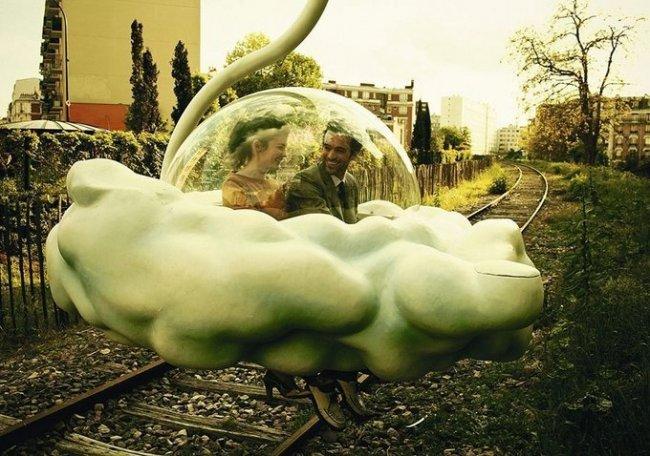
I haven’t read reviews for Michel Gondry’s newest flight of fancy, Mood Indigo, but I am willing to bet you that there’s a remark or two—good or bad—about the film’s “whimsy.” Gondry has become, in my mind, a man devoted to stories in which his people cavort in magical lands of their own imagination, tales of grown-ups who have never quite grown up. His work fits in very nicely with the films of Wes Anderson, Spike Jonze, and Jean-Pierre Jeunet, all of whom have one or two movies I find sublime, and many, many more that are so saccharine and disingenuous as to make me nearly want to puke.
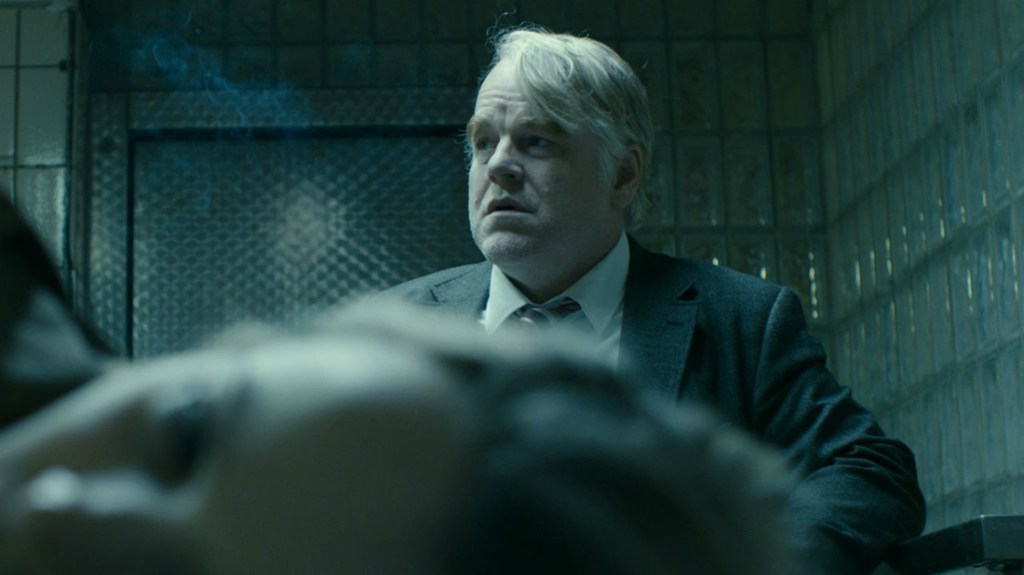
A Most Wanted Man (20140, directed by Anton Corbijn.
In Hamburg on a frosty morning, a man rises from out of the sea, climbs up a ladder, and stumbles onto a filthy dock. He crosses a set of railroad tracks, creeps through dozens of new automobiles, parked in a massive lot en route to German dealerships. Finding one of the cars unlocked, our man climbs inside, cold, probably hungry, obviously exhausted. In no time he is asleep.



 Movies with People Watching Movies