Clash by Night

Metropolis, 1927, dir. Fritz Lang. Heights Theater, Thursday, October 13.

Everyone’s heard of Metropolis. It screens fairly regularly–I’ve personally missed five screenings of it in Minnesota over the years, and I don’t know what I was doing at the time. Watching it with an eager crowd at the Heights for the first time, it’s energy is what stuck with me–director Fritz Lang has everyone running, twisting, fighting, dropping from rooftops, scrambling beneath caverns, getting swept away by rushing water, bursting through locked doors or iron bars, sometimes one person, sometimes vast swarms of people, thousands of people. That these actors and extras are moving like human fluid over these complex sets makes this very long movie–over two-and-a-half hours–an astounding experience in a movie theater.

Continue reading
Grindhouse Bums in Paradise

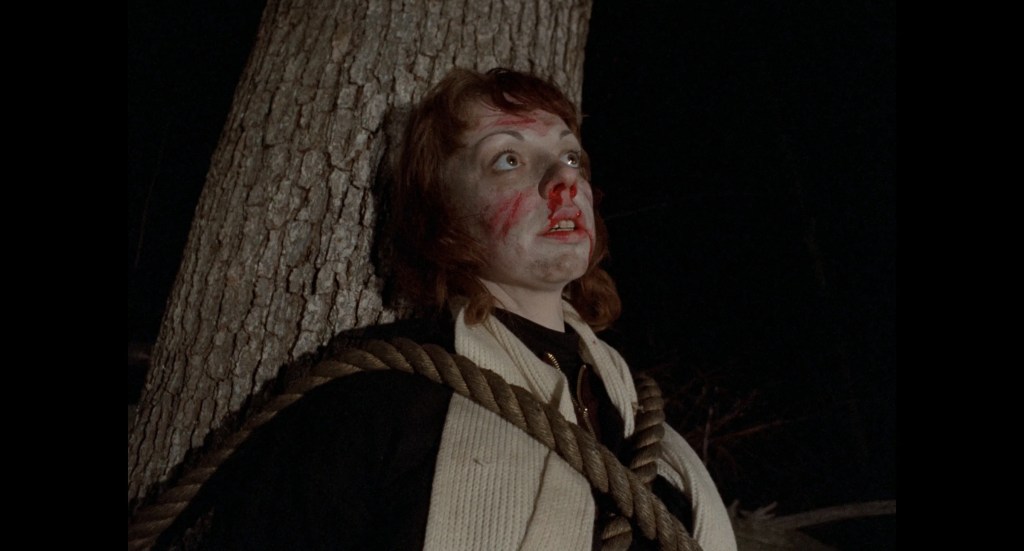
Shriek of the Mutilated, 1974, dir. Michael Findlay. Cinema of the Macabre at the Emagine Willow Creek, Monday, October 10.

My best friend, Mike, loves this movie, and it’s not hard to see why. And I love it, too, but only to see with him and only in theaters, where the reckless energy of astounded cinemagoers fills this balloon with a happy gas. That’s where I was the other night, at this gloomy cineplex that sits in a weird warren of mid-range apartments across from a strip mall with notoriously bad restaurants. But Shriek of the Mutilated! In a pristine 4K restoration! With money spent to secure the rights to Gershon Kingsley’s “Popcorn”! Cannibals, bizarre close-ups, a Yeti, the most depressing restaurant on earth, a party with a dedicated popcorn vendor, dancing to “Popcorn”, a woman with her throat slit (with a bread knife!) who drags a toaster across a room to electrocute her assailant (who’s drunk in a full bathtub), and music stolen from a variety of sources (including a lot of classical music that only makes this feel like there’s an urge towards pretention?), and that title! Shriek of the Mutilated! Don’t ever watch this movie alone because then it will look like shit and be utterly boring. Watch it with other Grindhouse Bums. It’s the only way.

Oh, Darcy Brown, the redheaded girl with the overbite who plays the doomed Lynn, I will love you forever. 

Everyone’s Talking at Me

My Dinner with Andre, 1981, dir. Louis Malle. Watched at home on a Criterion DVD provided by my pal James, Saturday, October 8.

I feel like a lot of people are aware of My Dinner with Andre without having seen it, and that’s probably as it should be. Watching it for the first time, the result of being given the Criterion DVD from a great friend from Richmond, VA (where the interior restaurant scenes were shot), I was struck by how in the 1980s there were so many of these “talking” pictures—Spalding Gray and Eric Bogosian, films where men really just talk, to the camera or one another, telling stories.

Continue reading

“Strange Behavior” is Strange Filmmaking

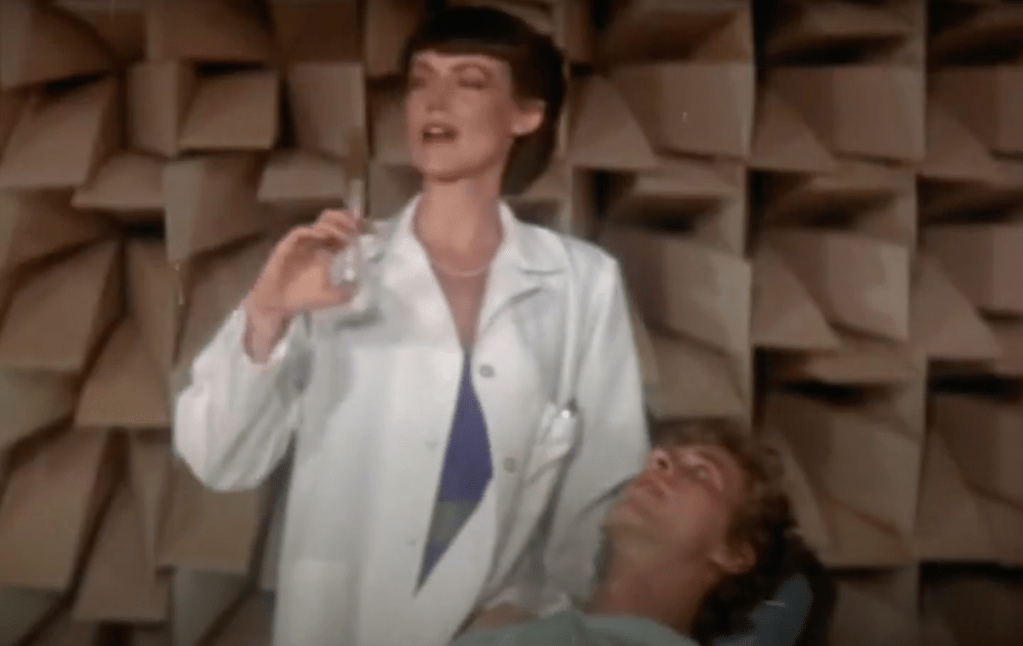
Strange Behavior (Dead Kids), 1981, Michael Laughlin. Watched at home on the Criterion Channel on Wednesday, October 5.

The Criterion Channel’s 1980s Horror series apparently intends to showcase
little-seen works like this one, though it does leave one wondering why they
didn’t get better fare. Strange Behavior is rich with character and
background detail—the opening scenes between Michael Murphy’s John Brady and
Dan Shor’s Pete, John’s son, is a study in communicating character. Two men
living together, the place a mess but not disastrously so, is perfect and
perfectly strange. The town looks real and lived in, as do most of the homes
and restaurants and stores.

Continue reading

Edgar G. Ulmer’s Melancholia?

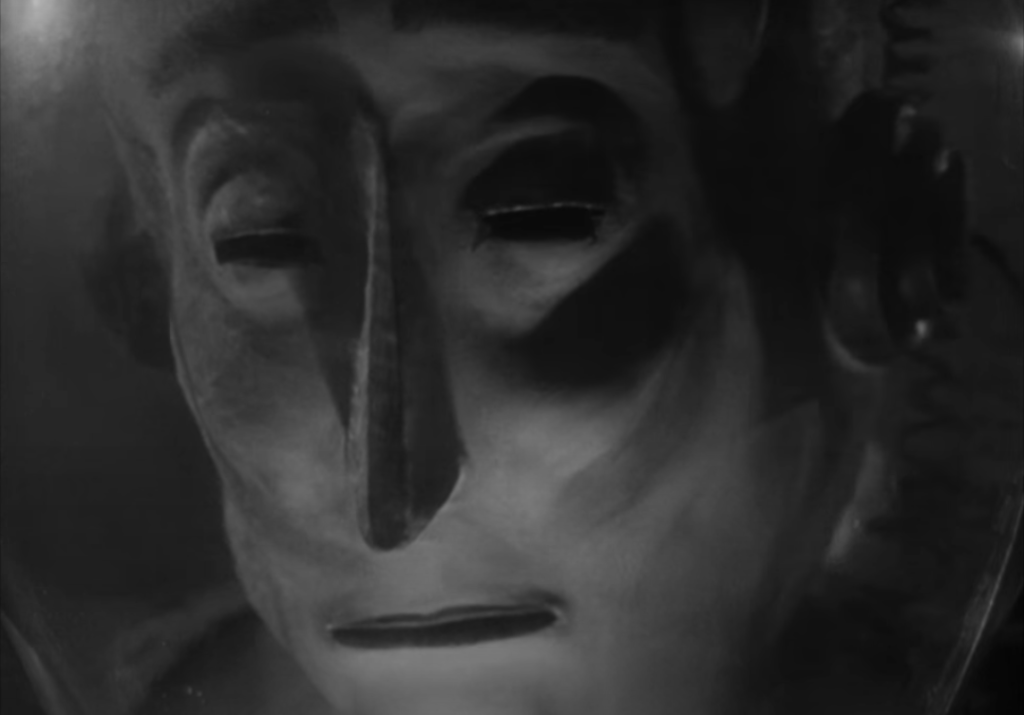
The Man from Planet X, 1951, dir. Edgar G. Ulmer, 1951, Movie Night at Tom’s (on Blu-ray), Tuesday, October 4.

In 1950, Edgar G. Ulmer hauled his cameras and crew onto the old sets of Universal’s Joan of Arc film (the one with Ingrid Bergman) to shoot a quickie sci-fi flick. He must’ve found some fog machines cheap, because he loaded up these sets with steam to hide that walls and cables and other stuff to make fake-France now look like fake-Scotland. Probably they settled on Scotland because they couldn’t think of anyplace that had more fog.

Continue reading

Cinema is Life and Life is Cinema.

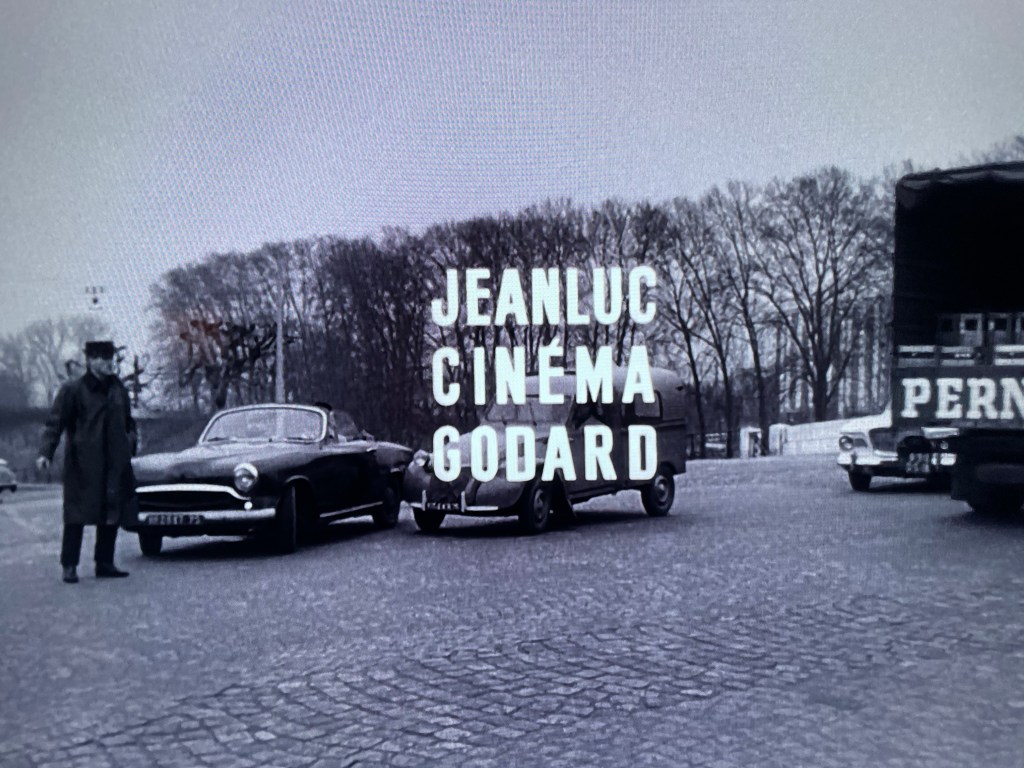
Bande à part, 1964, directed by Jean-Luc Godard. Watched at home on the Criterion Channel on Friday, September 30.

When Jean-Luc Godard died in Switzerland, I was in Winnipeg at a depressing Airbnb, watching Tarantino’s Pulp Fiction and eating Hawkins’ Cheezies. Which seemed strangely appropriate (maybe not the Cheezies or Winnipeg parts). Bande à part is supposedly Quentin’s favorite Godard, and he named his production company after it (A Band Apart).

Continue reading

The Silence

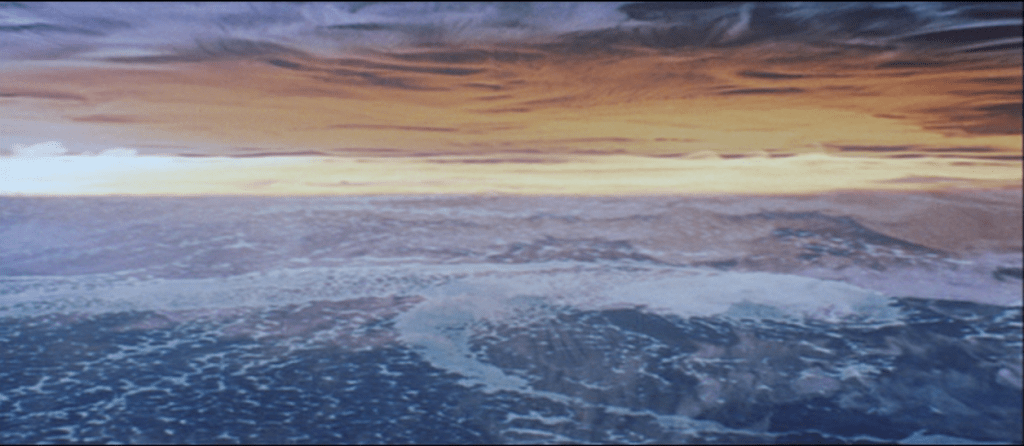
Solaris (Солярис), 1972, directed by Andrei Tarkovski. Heights Theater, Thursday, September 29 at 7:00pm.

Solaris is not my favorite Tarkovsky, but watching it the other night, it was no longer a film I disliked. When I’d first seen it with my friend, Andy, at Lansing’s Odeon Cinema, a little art house theater in the early 90s, we were both totally unprepared for this insanely slow cinema. In fact, we spoke for years afterwards about the long, long, long driving scene in which nothing seems to happen.

Continue reading

A Dream of Wolves

Never Cry Wolf, 1983, dir. Carroll Ballard. Streaming at home, Saturday, September 3.

Never Cry Wolf is one of the strangest, most beautiful and melancholy films I’ve ever seen. It will never appear on Criterion. No one will screen it in any kind of curated series. Small, boutique cinemas don’t know, and don’t care, that it exists. It stars Charles Martin Smith and Brian Dennehy and Zachary Ittimangnaq and Samson Jorah. Somehow, Disney produced it in the 80s, and cares so little for it today they allow it to be streamed wherever (as opposed to exclusively on their own service). It was directed by Carroll Ballard, who seemed content to craft a patient, moving story that would do nothing at the box office. It commits to its story, from a memoir by Farley Mowat, and trusts its stellar crew to do their jobs and leaves it at that. Mark Isham did the moody synth score that I listened to in the dark as a teenager, imagining the caribou scene in my head. I saw it in one of the worst years of my life, when I was a sophomore in high school, and went 3 times in one damp, cloudy March week to the Cinema 1 & 2 in Mt. Pleasant, by myself (already having seen it once in Saginaw with Dad and John). Then I would go home and dream about it, and feel renewed, but also with some heartache, but good, healthy heartache. Beautiful, beautiful, beautiful, Never Cry Wolf moved me again, and hopefully I’ll dream of it tonight.

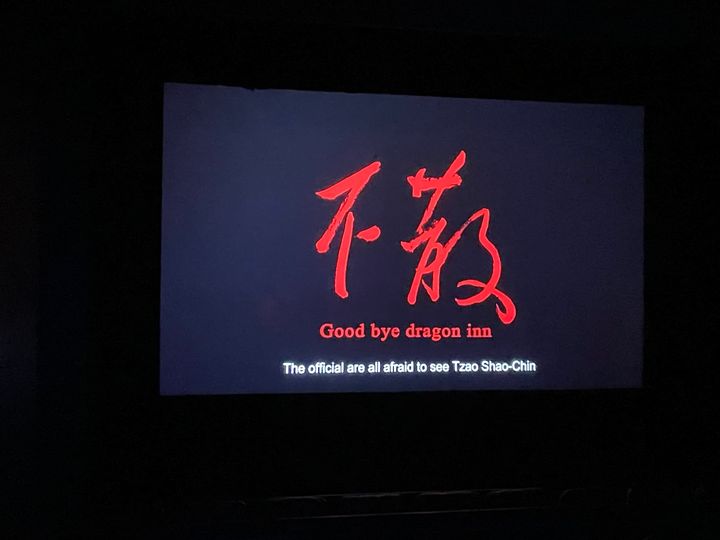
Goodbye, “Goodbye, Dragon Inn”

Goodbye, Dragon Inn (2003) dir. Tsai Ming-liang. Matinee at Willow Creek Cinema with one other happy patron.

This was one of the most incredible and undoubtedly memorable cinematic experiences I’ll ever have: Tsai Ming-liang’s slow cinema masterpiece, Goodbye, Dragon Inn at the Willow Creek Cinema on a sad Saturday afternoon. I was totally unprepared for this bizarre little movie, which is about the last day of a Taipei movie house, haunted perhaps, but probably not, leaking rainwater, peopled by bored cigarette smokers taking in the 1967 wuxia classic Dragon Inn. Thing is, the Willow Creek, though not old, is gloomy and radiates failure; its parking lot was torn up, it was bereft of people, and in Theater 1 was only me and one other fellow, who laughed uproariously throughout the picture. Arriving a bit early, I thought, “they won’t show the usual shit beforehand, will they?” Of course they did—why wouldn’t they? Repellant ads for microwavable mac ‘n’ cheese, the exhausting M&M spy capers, and the terminally corporate Marvel and Jurassic trailers. All of this, it turned out, made Goodbye even better—I’m actually glad I saw it there, alone in the back half of this broken down theater while the laughing man enjoyed his half. We reflected Tsai’s world; Tsai’s people reflected ours. Beautiful.

Continue reading

The Golden Age of Hollywood Presents: The Immersive Van Gogh Experience!

Lust for Life (1956) dir. by Vincente Minnelli.

When I pause to think about Vincent van Gogh, what he became, or rather, what his work became, the spectacle never ceases to amaze me. Vincent, as he liked to be called (his paintings are signed “Vincent”, not “Van Gogh”), was the consummate outsider, a man who couldn’t hold down a job, was almost literally so drunk on the words of Christ that he alienated his colleagues and flock, who couldn’t sell a painting (yeah, he sold one), couldn’t keep friends, lovers, or family any closer than arm’s length (in part, because that was the length at which they kept shoving away this overly melodramatic man), a man who killed himself at 36 and never got to witness what he’d become: the superstar of all artists.

Who else is there? Pick a name—don’t think about it, just say a name!—and, for the most part, everyone, every fool who buys Thomas Kinkade shit to the bummed out mopes with their Edward Hopper prints (me), to the fans of the Impressionists, modernists, you name it, well, they would blurt out Van Gogh. Picasso, O’Keeffe, Monet, Pollock, Keane, Kahlo… whether you like Vincent or not, that’s probably the one that gets the quick blurt. In any other artistic field, I can’t think of a single name that so dominates. Fiction, poetry, music of all genres, film, theater, sculpture… that same million would have thousands upon thousands of different names. Sure, this million may produce a few different artists. But almost everyone, and I’m guessing we’re talking in the 90%, would say Van Gogh.

Continue reading