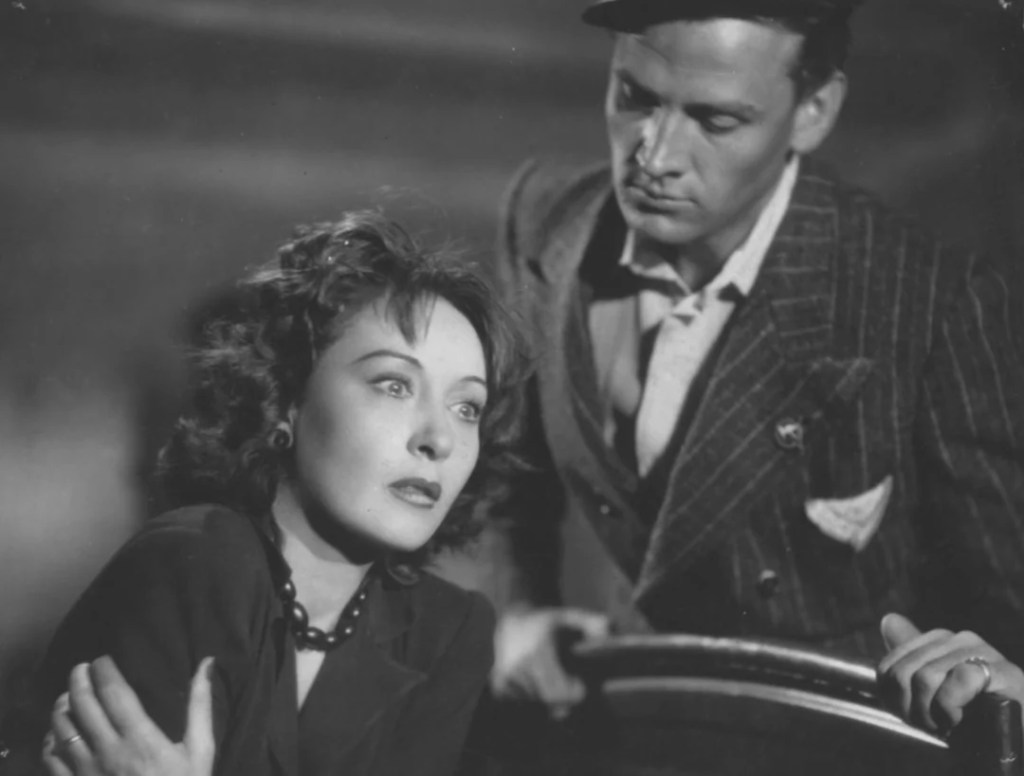
Ossessione, 1943, dir. Luchino Visconti. An ancient DVD from Europe (not available in the US), Tuesday, November 1.
So, right in the middle of World War II, in the last years of Mussolini, Luchino Visconti decided to adapt James M. Cain’s blistering American noir, The Postman Always Rings Twice. Trust me, that novel is brutal by today’s standards, lust and violence and despair, all of this coated in a fatalism so bleak and critical of the American dream it makes you think, “well, maybe I’m a Marxist after all…”
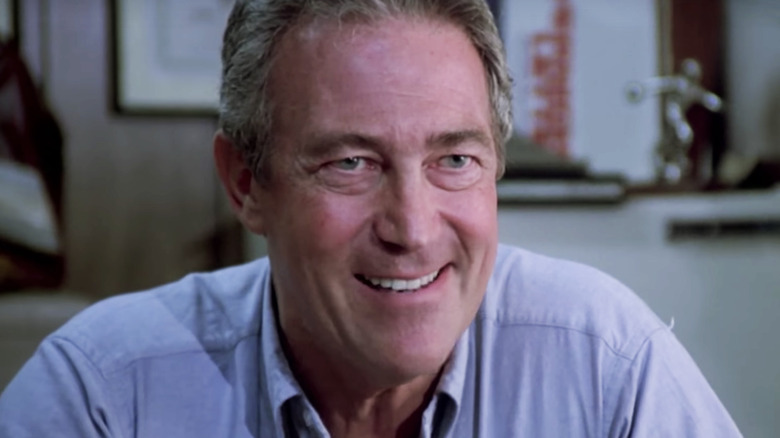
Wolfen, 1981, dir. Michael Wadleigh. Criterion Channel at Home, Saturday, October 29.
Yeah, OK, Wolfen. I see it’s on the Criterion Channel, part of their very disappointing 80s Horror collection, which couldn’t actually include great horror from that decade (I’m looking at The Shining and The Thing, specifically) and instead had to drop stuff like Wolfen on us.
Decision to Leave, 2022, dir. Park Chan-wook. St. Anthony Main, Friday, October 28.
Decision to Leave opened at the St. Anthony Main Cinema, or The Main Cinema, or the Film Society at the Main (I can’t keep their boring name straight) on this day, and it was me and two others at the 4:00pm show. It’s being advertised along with its distributor, which is MUBI, a streaming service. I think they’re doing their best trying to play both ends against the middle: yeah, please go see it at the theater or, even better?, on our streaming service. The result is that great art house cinema is not being seen in cinemas. Even though this seems like the kind of movie that would appeal to all the folks in the high rises near the theater. This goes for a ton of other great movies as well.
Galaxy Quest, 1999, dir. Dean Parisot. Streaming at home, Sunday, October 23.
…as a parody of Star Trek, it works a lot better if you’ve seen Star Trek. Now that I’ve seen Star Trek, and three seasons of The Next Generation, I appreciate many of Galaxy Quest’s jokes more, but now the trouble is that the movie has such a sharp script (David Mamet considered it one of “four perfect films”, which is a typical overstatement from that buffoon, but makes the point), executed almost perfectly, that it reveals how shitty Star Trek’s scripts always are. Always. Even the decent ones. There is literally no episode of Star Trek, in any iteration, that has a scene that matches the emotional intensity of Quellek’s death, or the humor, the heroics, and the battles in this excellent film… everything.
Star Trek would be the greatest series of all time if only they could’ve got their scripts tightened up. And they never did.
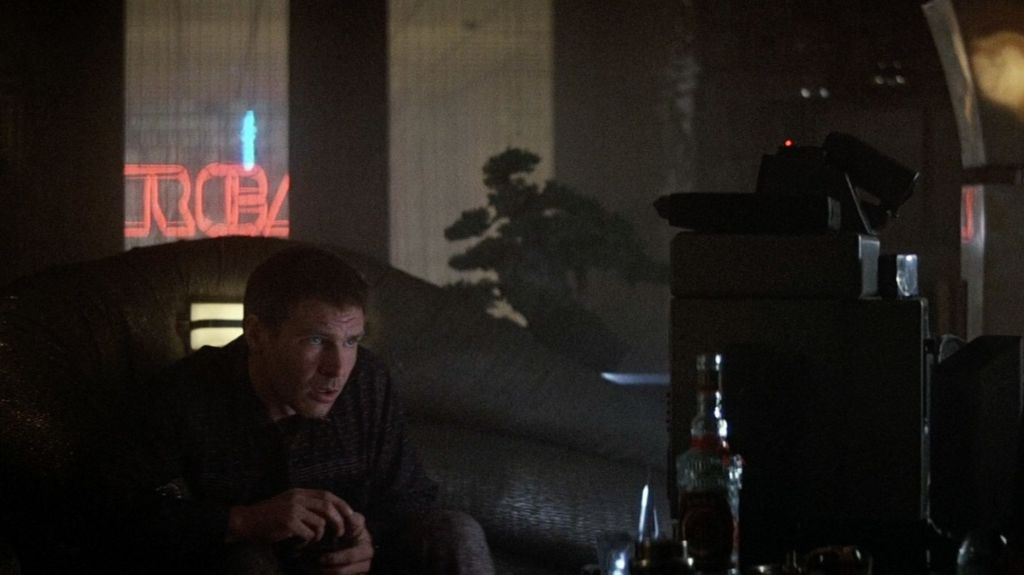
Blade Runner, 1982, dir. Ridley Scott. Heights Theater, Thursday, October 20.
Blade Runner is an amazing movie to watch in a theater with others. That’s just a given.
Janice, Mike and I saw The Final Cut, the one Ridley Scott approved, with the narration removed, the other night at the Heights. I didn’t hate the original narration, but it is an improvement without it. However, why didn’t they remove the information at the start of the film as well? I’d forgotten there’s a legend at the start, explaining about the off-world colonies and the escape. It’s equally as didactic, and everything in it is in the script.
The Hidden, 1987, dir. Jack Sholder. Criterion Channel at home, Wednesday, October 19.
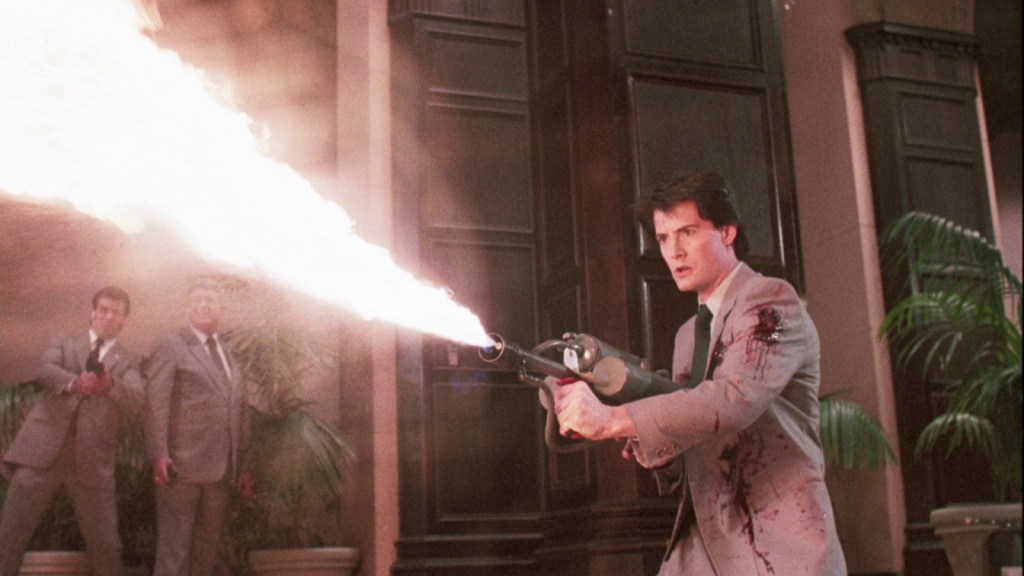
The Hidden is a 1987 action/sci-fi film that owes a bit to the first Terminator film and action tropes of that decade. It was directed by Jack Sholder, written by Bob Hunt, and stars Kyle MacLachlan and Michael Nouri. It’s saying a lot that your big name is Kyle MacLachlan, fresh from the disaster of Dune and the very art-house success of Blue Velvet (“art-house” meaning it made no money).
The movie is about a slithery, slug-like alien that’s on earth, that climbs into people’s mouths and takes over their bodies. They can withstand a ton of abuse, from pummeling to gunshots, and when the body is cashed, the alien moves on to another. This creature is a bad guy even within its own species, for another alien is doing the same thing, going into a body to chase after this slug in the hopes of killing it. No one involved in this movie, other than Kyle MacLachlan (and barely even him), went on to do anything worth seeing. The Hidden works all the way through because there’s virtually no fat, its action scenes are well paced and staged, the direction keeps you abreast of what’s going on and where you are, there’s an 80s-awful synth and rock soundtrack (which means fun these 3+ decades later), and it has a great sense of humor. It doesn’t deserve anything more than to be seen and enjoyed and forgotten. Sometimes, it’s perfectly enjoyable to see people doing their jobs and doing them well enough to earn a paycheck.
Wedding Night in the Rain (Hochzeitsnacht im Regen), 1967, dir. Horst Seemann. Movie nacht, Monday, October 17.
Wedding Night in the Rain is an East German musical from 1967, the year of the Beatles’ Sgt. Pepper’s, Arthur Penn’s Bonnie and Clyde, perhaps the most intense fighting in the Vietnam War thus far, etc. Behind the Iron Curtain, though, there was at least the appearance of things going smoothly—I mean, there wasn’t all the hippie shit at the very least.
If you watch East German movies (on Kanopy), you’ll find these weird, hyper-sunny musicals, with, in my mind, great music, decent acting, some knockout color cinematography (oh, that Agfacolor) and solid direction. And, if you dig a bit, some good old propaganda—kind of like in America. Their films urge groupthink and acting selflessly for the collective, we prize individuality and money.
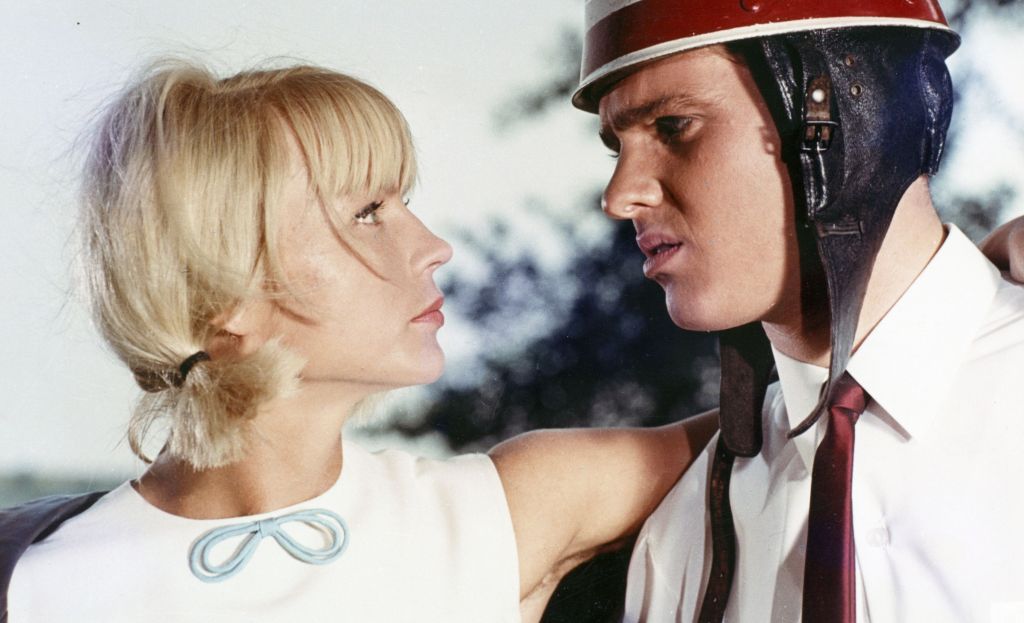
Case in point: Wedding Night in the Rain. This movie is bonkers in just the right way, buoyed by good music and winning performances from its two leads. Gabi (Traudl Kulikowsky) is a hairdresser in rural Germany who loves horses and is an accomplished rider. She’s going to follow her dream of becoming a jockey by moving to Berlin. Once there, however, she can’t land a job as a jockey (it’s only for men) and can’t find a place to live—you have to wait a year for a work permit and maybe two years for an apartment. Unless, of course, you find a man with an apartment to marry and then you’re set.
The Lair of the White Worm, 1988, dir. Ken Russell. At home on the Criterion Channel, Sunday, October 16.
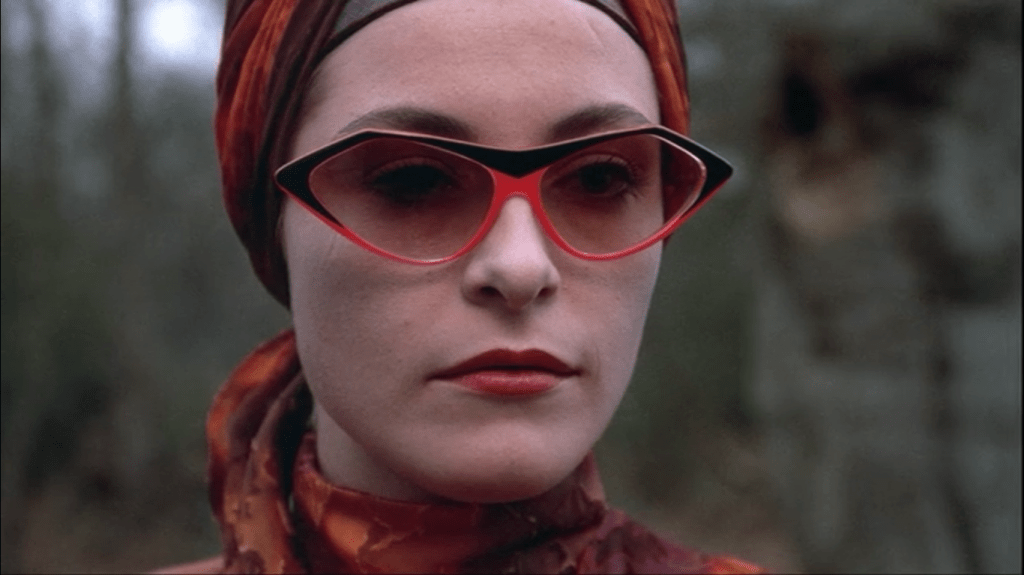
Ken Russell, wow. The Lair of the White Worm isn’t even his freakiest film; in fact, it seems his most conventional, until we have these mini-flashbacks where we see topless nuns and a Jesus assaulted by a very phallic white snake (the worm of the title). These aren’t reviews, just my simple thoughts on all the movies I’m seeing, so you’ll have to look up the loony plot yourself. I’ll just say this: Lair of the White Worm is over-the-top, is goofy as hell, but it’s stocked with fantastic actors (including the very young Hugh Grant and Peter Capaldi). Susperia on Friday is better looking, with better music, and yet no one seems to be enjoying themselves in that flick, and no one puts in a decent performance. Lair of the White Worm is also stupid, and outrageously so, a rollicking adventure of giant beasts, crazed vampire/worm women, depraved butlers and English legend. Because Russell went for broke, and because he cast the fabulous Amanda Donohoe as his evil lead, the movie has 100 times the energy of Argento’s more stylish and tedious film. Man, Amanda Donohoe! According to the unreliable internet, Donohoe, at age 16, left home to live with Adam Ant, and once single-handedly beat up a rival band who had trapped the singer in a hallway. She looks like she could do that in The Lair of the White Worm. Honestly, you can’t take your eyes off of her, she appears as though she’s eager to devour the flesh of every actor in every scene, and perhaps the crew behind the camera. Bravo, this movie’s a blast.
Susperia, 1977, dir. Dario Argento. Trylon Cinema, Friday, October 14.
I’ve been waiting to see Susperia in theaters for years. Weirdly enough it hasn’t screened here recently, or at all–maybe 25 years ago I wouldn’t have looked for it, but for all I know this is the first time it’s screened in the Twin Cities since I moved here in the early 90s.
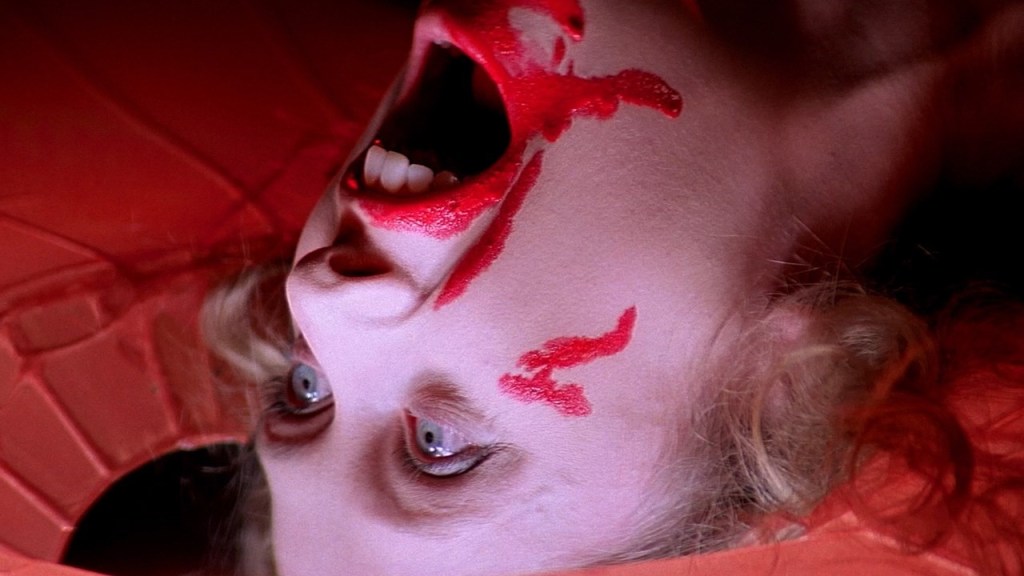
Honestly, I was struck by how absolutely stupid this movie is. The set design is gorgeous and the music, by Goblin, is fun. But Susperia is dull (first big problem), and I found the movement of characters through these sets really sluggish and uninteresting, a failure of a director to know how to set up his cameras and block his people so they drift through scenes in a way that fascinates. Argento seems to have wanted this movie to take place at what is regarded as the best dance school in Europe, by extension the world. But the few dancing scenes clearly reveal actors who don’t know how to dance and a director who obviously doesn’t care about that. So why set it there? All of the characters are dull and bad actors (and if your actors aren’t good, maybe get good dancers who can’t act?), Jessica Harper stumbles through this story, literally half-asleep or wacked out with fear like Shelley Duvall in The Shining. The plot is on her shoulders and she appears uncomfortable with that. The evil is far from palpable or immersive–plot spoiler, it’s witches!–and if this is supposed to be a bad-ass coven, why don’t the rest of the student body seem to feel anything? The school has a lot of students, we see them (not dancing, of course) and none of them, with the exception of two who are killed and our very passive hero (Harper) seem to notice or care about the strange goings-on). When I say “stupid”, I don’t mean that I find stories of witches stupid, I mean that none of the scenes in this film are well thought out, and many of them, the ending in particular, are so freaking silly it feels as though they were written quickly in order to move the story along or bring it to a close. The whole thing feels made on a first draft of the script, and a bad first draft at that. What a disappointment.



 Movies with People Watching Movies