
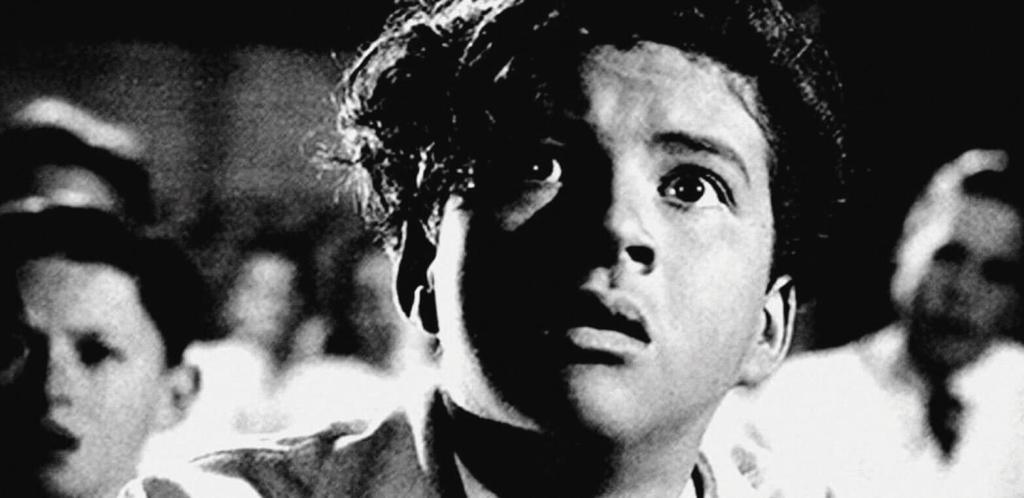
Si Muero antes de despertar (If I Should Die Before I Wake) (1952), directed by Carlos Hugo Christensen. Thursday, March 2, Heights Theater.
Moments at the Heights Theater from behind the concession stand.
Nikki from the Trylon talking to the regulars, handling the Trylon punch cards. She walked to the theater from South Minneapolis, it took her a few hours.
The regular who wears a mask, like lots of people, but he wears one of those painter’s masks with the two round filters at each end, which makes me wonder if he’s also afraid of, like, mustard gas or something.
There’s a man who always gets the same double chocolate cookie, with such regularity that we set one aside if we’re down to one. Another who loves butter, extra butter, please more butter. Then he eats a bit and asks for more butter.
Tom, from behind the popcorn machine talking to James about old radios. Or phonographs. “Everyone I’ve talked to says the RCA 109 is better.” “Really?”
A mother and her adult son, both Spanish-speaking and in the theater for the first time for all these Argentinian noirs, a small popcorn, plain, and a small soda. She’s thankful every time for this series, the son looks around like he’s worried about spies. He wears a black trenchcoat and looks very professional.
The 35mm print is clean and perfect, barely used, but it’s not a restoration, so the thing is faded in spots and has the old slash-marks indicating a reel change. But the film leaves us mesmerized.
Si Muero antes de despertar is the story of a kid whose father is a cop, and the kid has a discipline and anger problem. He makes friends with a girl who suddenly is flush with delicious candy. Where’d you get it? he wonders. From a man. Then, in this very Catholic film, she makes our hero pledge to keep this a secret through an elaborate oath. Then she’s murdered, and because of this oath he can’t say anything–when he asks advice, everyone tells him a man must keep his word.
The violence is implied to have been unbelievably brutal, to the extent that the father of the hero is considering quitting the force.
Years later, the boy, now a teenager, befriends another girl, who is also abducted. This time the boy tracks her down. He finds her trussed up and beaten in a house that’s run down and frightening, like the shack in the Blair Witch Project. Lit by his wobbling flashlight, the house exudes horror. When the boy frees the girl, she begins to scream for her mother, and a man behind me said, not whispering, “Quiet! Quiet! You’ve got to be quiet!”
I’ve honestly never seen a film with a such a tense climax involving children. It’s different from Fritz Lang’s M, and those remakes, because the children there are an abstraction, we never know them. We know very well all the kids here, and the villain is not cool, not sad Peter Lorre or a slick serial killer like Anthony Hopkins, he’s a man who wants to kill these kids. After beating the hero, he falls into a trance, pulls out a massive and sharp knife, and mutters, “no more bloodless strokes.” I’ve honestly not been this tense in ages in a film.
Afterwards, the regulars hung out, and we talked, stunned and amazed at this movie that won’t show again, probably ever in Minnesota, probably ever in America. Maybe it’ll stream someday, but it doesn’t matter, because we all watched this crazy film together.
 Movies with People Watching Movies