
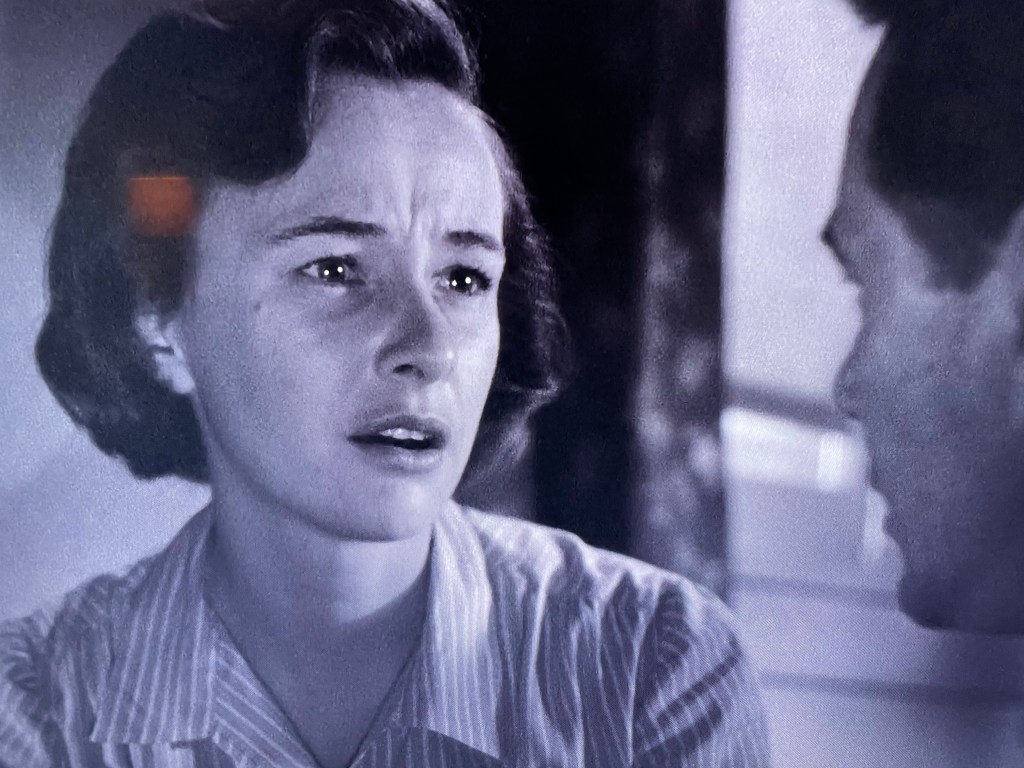
The Breaking Point, 1950, dir. Michael Curtiz. Criterion Channel at home, Sunday, November 6.
When we think of film noir, we conjure up many images: tough men plotting murder or a cunning heist, scheming femme fatales, handguns and blackjacks, close-ups of nervous-looking character actors, cops closing in, that chiaroscuro lighting, alleyways, seedy bars and nightclubs, those automobiles with their massive interiors.
But the best film noir, to me, are the ones that carry us deep into the genuine squalor that moves desperate people into the unthinkable. The greatest noirs remind us that crime isn’t here for our entertainment, it’s the result of dreams curdled into nightmares, of literal hunger, homelessness, of watching children squirm beneath the weight of poverty, their parents losing their grip because of this. Much as I love The Big Sleep, Double Indemnity, The Maltese Falcon and the great crime films of Jean-Pierre Melville and Seijun Suzuki, in my heart is a special place for the smaller, cheaper, more squalorous noirs like Kansas City Confidential, Try and Get Me!, and Cry Danger, those poverty row productions focused on the lives of people I can relate to very well.
Add to this The Breaking Point, part of Criterion’s celebration of actor John Garfield. This is a fantastic little noir, gritty and real. This is yet another adaptation of Ernest Hemingway’s mediocre novel To Have and Have Not, turned into the great Howard Hawks movie. Hemingway’s book tries to examine poverty in America, but it’s mean spirited and was disliked even by the author. Hawks, as he did with The Big Sleep, turned this sordid tale into a romance and adventure reminiscent of Casablanca. Oddly enough, Casablanca’s director, Michael Curtiz, was brought in to direct The Breaking Point, which is absolutely nothing like Casablanca.
And that’s very strange. There’s nothing I’m aware of in Curtiz’s long filmography that matches the despair and attention to sad detail as this movie. Screenwriter Ranald MacDougall worked with Curtiz on the equally great Mildred Pierce, which is another noir that doesn’t really engage with the working class, even though Mildred starts out swinging towards the bottom. But she’s used to luxury, attains it, and maneuvers that world like she was born to it.
The Breaking Point is the story of Harry Morgan, a man who owns a boat in Southern Califiornia (instead of Florida as in the book), and who is up to his ears in debt. His beleaguered wife, Lucy (Phyllis Thaxter), is trying to hold their home together and consistently reminding him that they have great opportunities at her father’s lettuce farm in Salinas. A good job–Harry would be a foreman. But he was in the Navy, running a boat gives him freedom and pride, and he doesn’t want any handouts. Nor does he have any interest in living out his days in the hot sun picking lettuce, or lording over people who pick it.
From the very start there’s brilliance–Curtiz was a master of interior space. Ric’s American Cafe in Casablanca, Mildred Pierce’s first bungalow where she makes pies, then her restaurant, then her spacious digs by the sea, and here: the tiny but warm home that Harry retreats to after a bad day, situated on a canal, run down but pleasant; the seedy bar in Mexico when he’s stuck after being stiffed by a jerk; a cramped office that’s home to the seediest lawyer imaginable, bottles and dirty clothes strewn everywhere… these places make this movie come alive. A lot of movies just have sets–can you remember Bogie’s apartment in The Maltese Falcon or The Big Sleep? Not really, it’s not very important, and that’s fine. But these great sets communicate feeling, they communicate character (that dark bar is a choice of Harry’s, after all).
The plot is sharp, it’s a thriller involving Harry getting caught up in smuggling immigrants and later, as a getaway for criminals, both of which come because he’s down and out and is on the verge of losing his boat. What can he do but pack a piece and begrudgingly turn to crime?
Except… Phyllis Thaxter’s Lucy isn’t interested in that shit. Perhaps the most surprising thing about this very good story is that the script actually makes Lucy into more than just a beleaguered mom who doesn’t know which way to turn. That’s the usual shtick. No, she’s aware that there’s good work in Salinas, safe work, work that keeps the family together. She is totally unwilling to listen to Harry’s bullshit. And a lot of what drives noir is the man’s desire to “be something”, which, if you think of it, is kinda bullshit.
After our man returns from Mexico, after having his boat impounded because he may or may not have smuggled illegal immigrants into California–a scheme he didn’t share with Lucy, of course–she reminds him of the lettuce farm and his family. He barks at her that if only she knew what he’s been going through, being a former soldier and just wanting to be somebody… well, Lucy just lets him have it:
Don’t give me that Purple Heart routine. You’ve got a wife and two kids to think about. Keeping us together, getting us enough to eat, clothes on our backs. That’s the biggest war there is, and you better realize it.
Thaxter doesn’t deliver this speech with tears in her eyes, but with pure steel, enough is enough for her, and she looks like she’s about to throttle him. And for good reason. Harry’s terrible decisions have consequences that are genuinely shocking and profoundly awful, not just to him but to another family close to theirs. In the film, Thaxter is made up to look not made up, and her performance is astounding, calling not only into question Harry’s actions, but the very heart of film noir, this ridiculous pursuit of dreams. Her Lucy pulls back the curtains to show the children and the wife of the men whose foolish decisions upend so many lives in these films. It’s astonishing.
The Breaking Point has brilliant acting all around, from Garfield to Thaxter to Patricia Neal as the femme fatale (a role that could have been written out with ease–it’s totally unnecessary), and the great Juano Hernandez, whose character’s fate brings considerable pain to this stunning little noir.
 Movies with People Watching Movies