
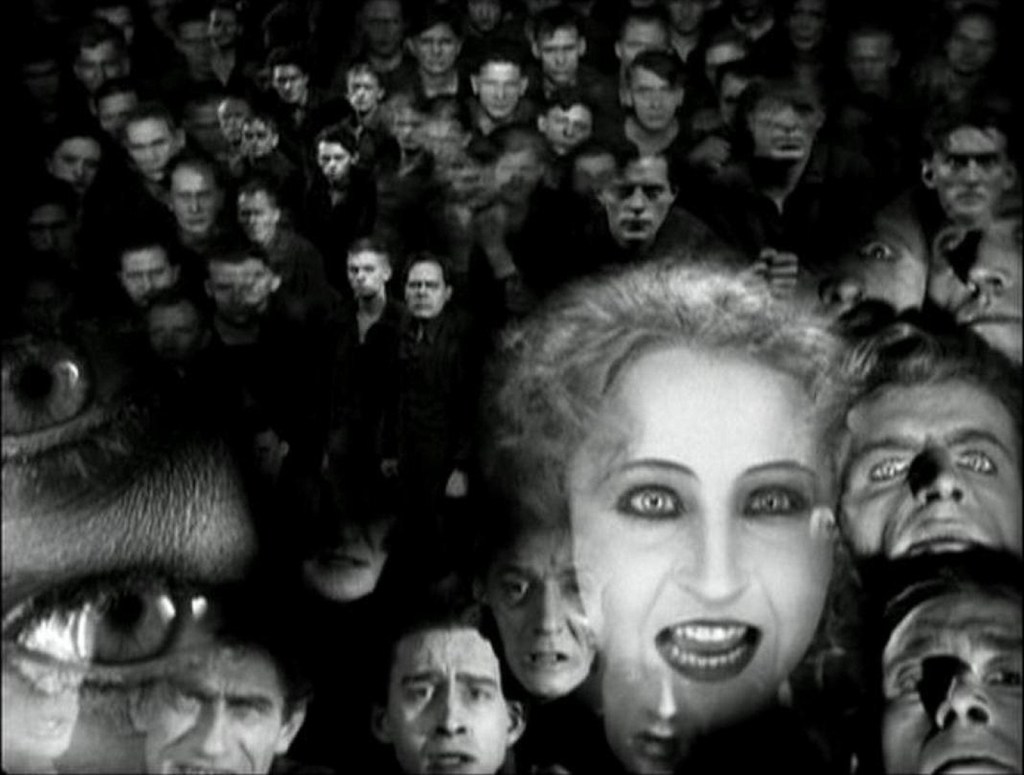
Metropolis, 1927, dir. Fritz Lang. Heights Theater, Thursday, October 13.
Everyone’s heard of Metropolis. It screens fairly regularly–I’ve personally missed five screenings of it in Minnesota over the years, and I don’t know what I was doing at the time. Watching it with an eager crowd at the Heights for the first time, it’s energy is what stuck with me–director Fritz Lang has everyone running, twisting, fighting, dropping from rooftops, scrambling beneath caverns, getting swept away by rushing water, bursting through locked doors or iron bars, sometimes one person, sometimes vast swarms of people, thousands of people. That these actors and extras are moving like human fluid over these complex sets makes this very long movie–over two-and-a-half hours–an astounding experience in a movie theater.
This is important, this movement, because Metropolis might have the worst plot of any great film I’ve ever seen. You get swept up in this city of the mind and the way in which the actors are interacting with the machines and one another, and then suddenly it slows down, ever so briefly, and you go, “What?!?” I guess I never realized Metropolis was so damned religious. Bizarrely Christian, seemingly Communist, and then, oh no, everyone should work together and trust one another, the dream of the Capitalist. Its workers clashing against the upper classes, the upper classes controlling the city and trying to suppress the workers, and, honestly, Lang seems to hold both parties in contempt, willing only to make an entertaining and eye-popping movie. Which is exactly what he did.
I would honestly urge people to avoid watching Metropolis at home. With distractions and the ability to pause the film, not to mention its stunning set design reduced in size to a mere diorama, the plot will assert itself even more, most likely ruining the picture. Metropolis, despite its myriad flaws, is essential viewing on the big screen.
 Movies with People Watching Movies