
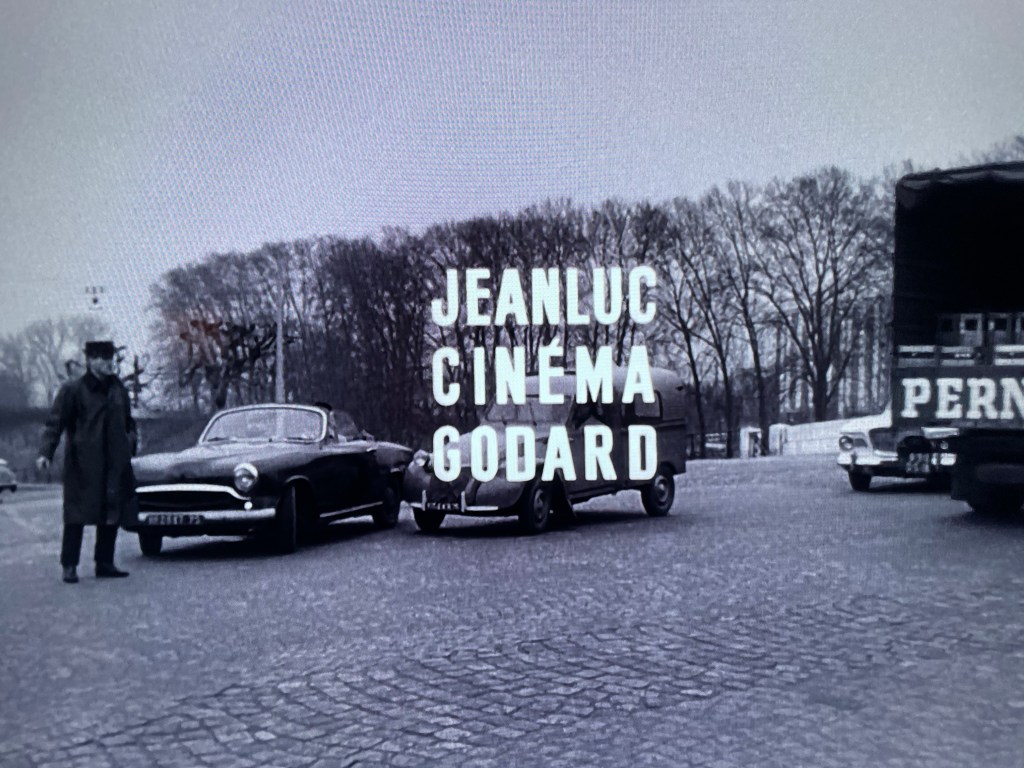
Bande à part, 1964, directed by Jean-Luc Godard. Watched at home on the Criterion Channel on Friday, September 30.
When Jean-Luc Godard died in Switzerland, I was in Winnipeg at a depressing Airbnb, watching Tarantino’s Pulp Fiction and eating Hawkins’ Cheezies. Which seemed strangely appropriate (maybe not the Cheezies or Winnipeg parts). Bande à part is supposedly Quentin’s favorite Godard, and he named his production company after it (A Band Apart).
I love the cold in this movie. When you have no money, cold is a thing that chases you around and reminds you of your low situation. Typically you live in a place that’s drafty, your coat is shit, and you probably drive an awful car whose heater is broken and where wind slices through and cuts your neck and belly. Franz and Arthur (Sami Frey and Claude Brasseur), not yet even a pair of hoods, slap their hands together and drive around in a busted old convertible as they wait for a young woman who might lead them to a nice heist. This young woman is Odile, played by Anna Karina. Nothing goes as planned, and for the most part all the action takes place under a sky so flat and gray it looks as though the cloudcover is two miles thick.
I never noticed this before, but the famous dance scene is really Godard messing with your sense of cinematic reality. Someone supposedly once asked him why there’s so much blood in Pierrot le Fou, and he said, “that’s not blood, that’s red.” It’s red, it’s cinema. Well, in the scene in the cafe, as the two hoods and Odile start to dance to the Madison, Godard pulls the rug out from under you–the music is removed, and you hear the sounds of the cafe and the shuffling of feet and snapping of fingers. There is actually no music in that room, or set. With this removed, you see the actors acting–they had been dancing without music, music that was edited in. The music is exegetic: it’s not in the characters’ world. Though we thought it was, and maybe it is (they claim to hear it, that’s why they get up to dance). But sound technology wasn’t such that Godard could scrub the music from the scene and leave the noise of the cafe and Karina shuffling on the floor, or snapping her fingers to silence. What is cinema and what is real? Well, nothing in the movie is real, but music is real, dancing is real, right?
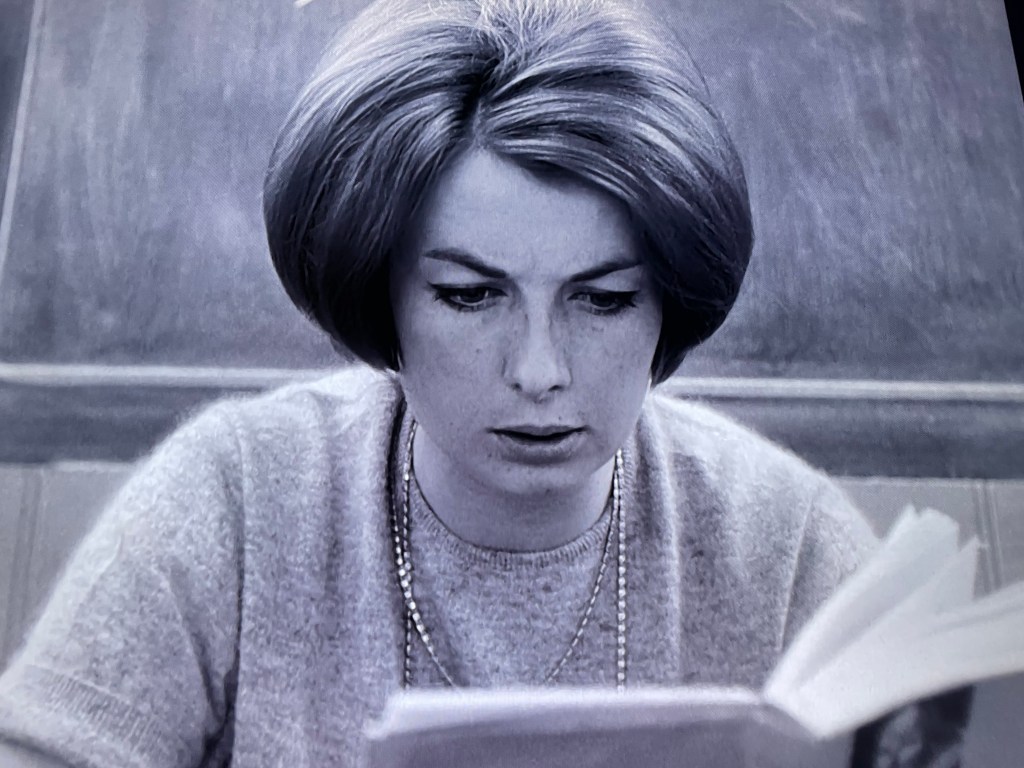
Also, I also never noticed, but the English teacher (Danièle Girard) in this movie is beautiful, even and especially as she becomes more and more enthralled with Romeo and Juliet.
 Movies with People Watching Movies