
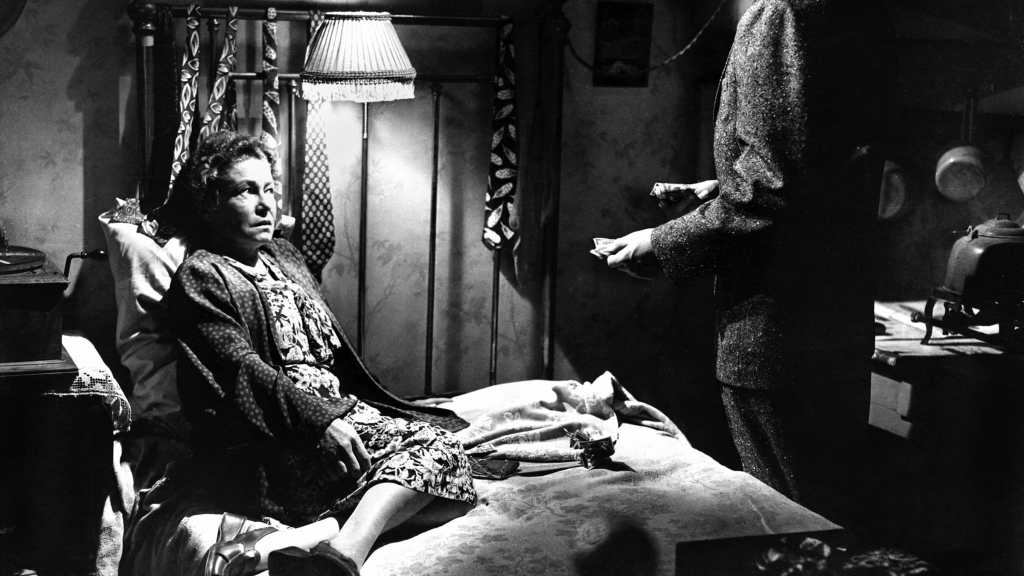
Jorge Luis Borges once wrote, in the poem “Recoleta Cemetery”, that we mistake the peace of the cemetery for death, when “what we long for is sleep and indifference.” This longing, to let go of the world’s troubles and finally taste some of that sweet indifference, seems to flow through the work of one of my favorite character actors: Thelma Ritter.
If you love classic movies, you know Thelma Ritter. There she is in Hitchcock’s Rear Window, the woman who rubs down Jimmy Stewart, who rolls her eyes at Grace Kelly’s negligee, the one who wants to see what’s in the hat box the dog buried in the garden. Ritter was first seen in film being a frustrated mom wandering the aisles of Macy’s in Miracle on 34th Street, answered phones in Call Northside 777, and, just a few years later, landed a Supporting Actress nomination in All About Eve.
Born and raised in Brooklyn, Ritter seemed to know early on that she was no beauty, that she wasn’t going to rise into the firmament with her name emblazoned across marquees. But she also seemed to thank her lucky stars that her role in films wasn’t as Selznick’s charwoman, but rather a memorable supporting player in a variety of neat little roles. David Thomson once wrote that Ritter seemed to have arrived on the set after a morning scrubbing floors, and left at night to go answer telephones. True–and like the great character actors of her day, she is the person who brings us closer to the plot, the one with whom we truly relate. In Eve, Ritter leavens the bitchiness, her timing is perfect, and she slows down the excessive chatter to speak lines that seem to remind us that not everyone’s a raging thespian, that you can be a part of this world of theater and not lose your soul. In Rear Window, she’s as tough and reliable as a denim jacket to Kelly and Stewart’s silk trousers. Would that Hitch cast her in more movies!
Thelma Ritter was not the type of actor who came in and tried to steal scenes with her excessive down-to-earthness. She worked in the background, said her peace when called upon to do so, and then moved on. And yet, it’s this matter-of-factness, this decidedly unromantic view of the world, that sometimes kicks a plot into gear.
Consider Rear Window. Ritter plays Stella, a nurse who’s there to help heal Stewart’s L. B. Jeffries, bedridden due to a broken leg whose cast goes from hip to foot. She gives him a rub down, listens to his complaints about his girl and about his life, and then his theories about the neighbor he’s been spying upon across the courtyard. Without Ritter leaping into this mess, both Jeffries and his girl, Lisa Fremont (Kelly), would be mere voyeurs, playing a game of Clue. Ritter is the voice of reason, of reality, and when she believes there might be a crime… well, it must be true.
Ritter’s great in all these roles, and yet she probably wouldn’t be as endeared today were it not for her moment–the incredible death scene in Sam Fuller’s great Pickup on South Street.
The plot isn’t important for our purposes, except to say that Ritter’s Moe Williams is caught between some Communists and the so-called hero, Richard Widmark’s pickpocket Skip McCoy. They want some microfilm that Skip accidentally stole from one of their operatives. In the midst of this MacGuffin comes Moe. Moe sells ties, and this gig leaves her exhausted. Up and down the stairs, up and down the sidewalks, up and down and into the subways of New York City, Moe hauls a briefcase full of cheap neckties to sell to people. She pinches pennies, eats cheaply and has long ago stopped caring about the taste of food.
Moe’s joys are simple and come in a pair: visiting the cemetery and walking amongst the dead she hasn’t known, the respectable people who had the cash to put themselves into a nice plot with a good view and air that doesn’t reek of taxicabs and reverberate with the sound of the El. It’s her dream, the overriding goal of her life, to be buried in a nice cemetery. So there’s that. And she likes to listen to her Victrola, though she can barely crank the thing anymore.
Ties aside, there is an additional method that Moe employs to save for that cemetery plot. It’s a grift: she sells the names of cannons (slang for pickpockets) to the cops. Since Moe’s everywhere and ignored, she hears plenty, and for that plenty the cops will pay. The crooks who go to Sing Sing don’t even mind–they nod, grumble, and acknowledge that Moe’s on the up-and-up, you gotta do what you gotta do. The money she gets from New York’s finest, rolled in a tight bundle and kept on her day and night, will buy her that plot next to some banker, under a tree and looking out over a pond or something. For Moe, every little bit helps, every little bit gets her closer to Borges’ sleep and indifference.
Thelma Ritter seems to have been born tired, and in Pickup on South Street, she employs this, this gift if you will, to its greatest and most profound effect. Here, Ritter grabbed what little she had, and ran with it.
[Pause here and Google: Thelma Ritter death Pickup on South Street for a video of this incredible scene]
Pay attention, now: Moe, tired, aching, lonely as all hell and hoping only for a sip of cheap liquor and five minutes of music, returns home and finds a killer in the shadows. At first, Fuller doesn’t reveal the man we know will end her life. She has certainly seen the man, but she’s resigned to this angel of Death, this clumsy fool with rod in his hand, because Moe knows that Death comes in many incarnations, and this is hers. Moe Williams does not tremble or cry for help, nor does she fight back. She has failed to escape from poverty and worse, failed to escape an eternal fate in Potter’s Field. But she shrugs off the irony of this cruel world, summons up the dignity that she has also banked these many years, and reaches for a weary and spectacular grace.
Much as I love Sam Fuller’s movies, he never directed a scene with more powerful emotion than that one. I’m guessing that actors with mantles full of bright Oscars wish they had five minutes like Ritter was given here. Fuller’s Pickup is a great thriller, but it’s also a great movie about the underworld, about the people who scrape by on their wits, kicked around and brutalized (or kicking and brutalizing) every day of their lives. Thelma Ritter brings dignity and pathos to this movie, makes you realize that perhaps the darkness of noir is deeper than cool: it’s painful, depressing, and wearying.
Thelma Ritter was born in Brooklyn on February 14, 1902, and died of a heart attack on February 5, 1969.
 Movies with People Watching Movies